
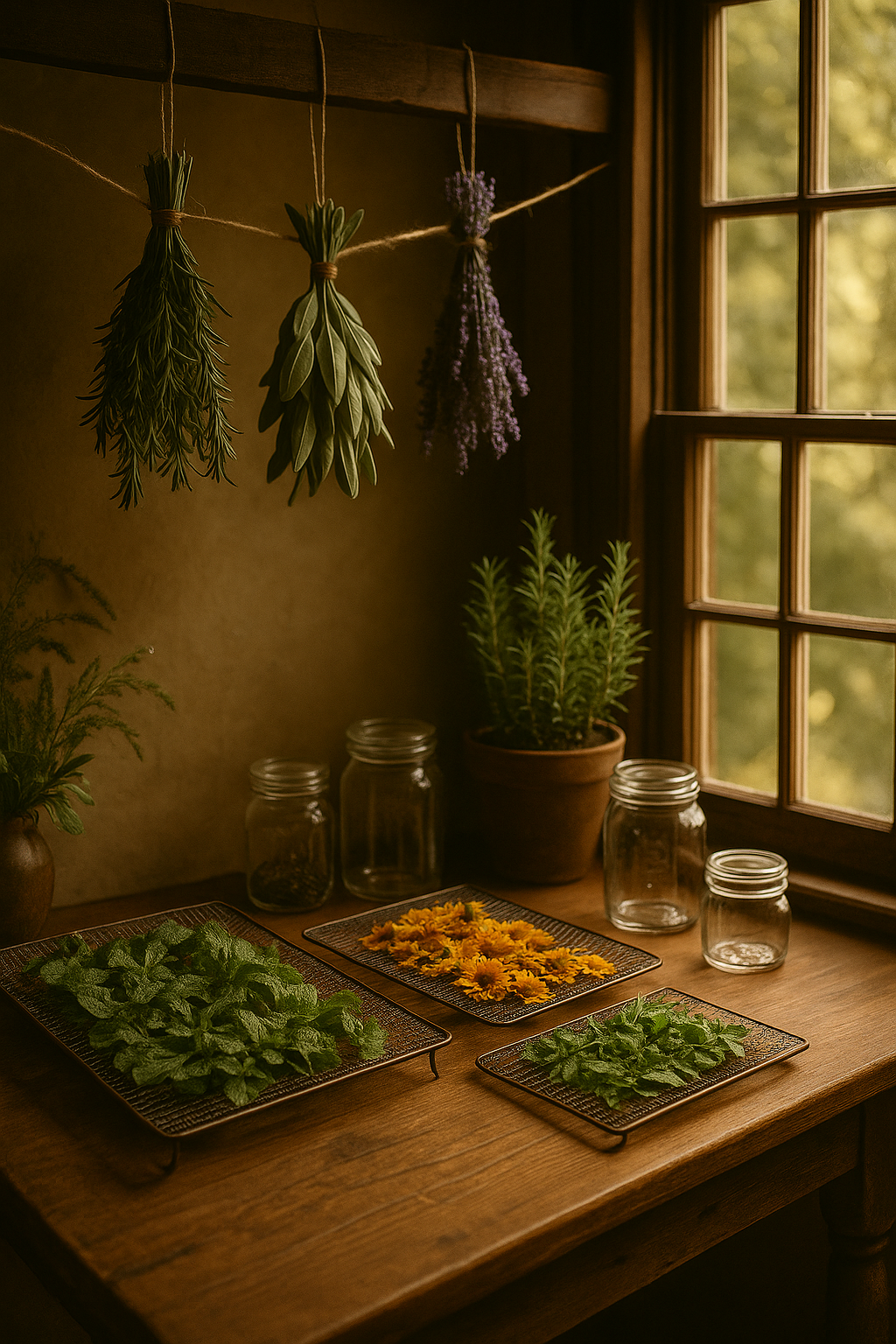
Preserving the Harvest: How to Dry Herbs
Harvest season is one of the most satisfying times for any herbalist, gardener, or kitchen witch. But fresh herbs don’t last forever — and if you want to enjoy their flavor, healing benefits, and magical properties all year, learning how to dry herbs properly is essential.
Drying herbs is both a practical skill and a deeply intentional act. The process preserves their potency while allowing you to work with plants long after their growing season ends. And when done with care, the magic you’ve cultivated in the garden can follow you into winter, ready to be brewed into teas, mixed into salves, or added to spell jars.
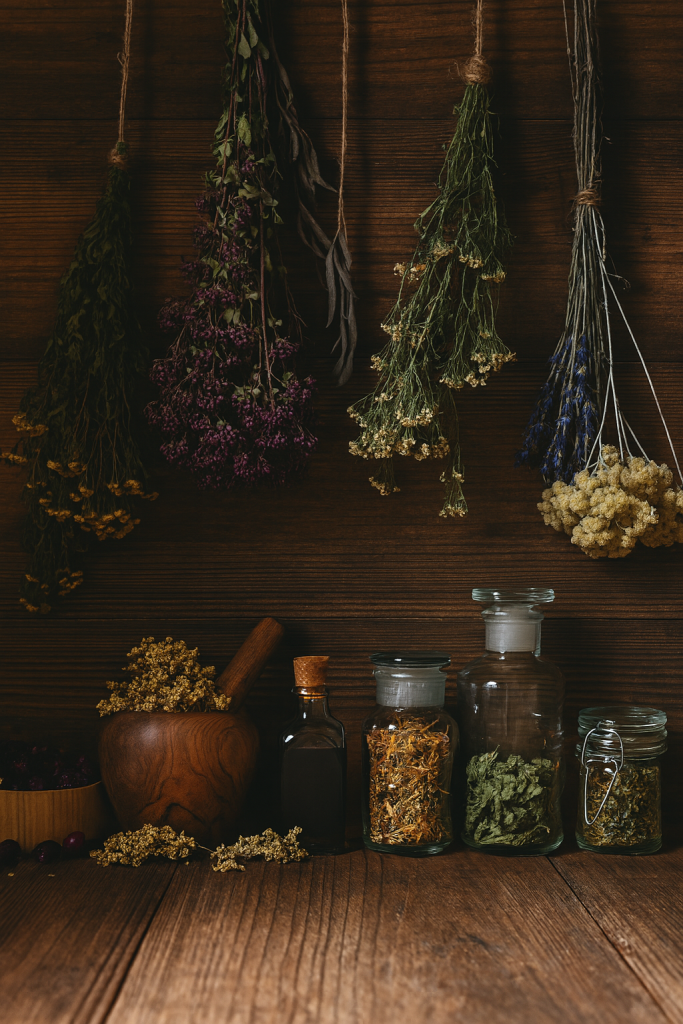
Why Dry Herbs?
- Longevity: Most dried herbs can last up to a year with minimal loss of potency.
- Convenience: Have your favorites on hand without relying on store-bought, often weaker options.
- Control: You choose how and when they’re harvested, ensuring maximum freshness.
- Magic & Medicine: Drying locks in not only flavor and aroma, but also the energetic signature of the herb.
When to Harvest for Maximum Potency
The timing of your harvest affects both medicinal strength and magical energy.
- Medicinal Timing: Harvest in the morning after dew has evaporated, but before midday heat — this preserves volatile oils and active compounds.
- Magical Timing: Many practitioners choose to harvest during a waxing moon for growth-related intentions, or on a full moon for peak potency.
- Seasonal Peak: Pick herbs right before they flower for maximum leaf strength; harvest flowers at full bloom.
Preparing Herbs for Drying
- Select Healthy Plants: No yellowed leaves, mold, or insect damage.
- Rinse if Needed: Lightly rinse under cool water only if dirty; shake or pat dry thoroughly.
- Remove Damaged Parts: Discard wilted or browned leaves.
How to Dry Herbs
1. Air Drying (Bundle Method)
Best for: rosemary, thyme, sage, and lavender.
- Gather small bunches (5–10 stems).
- Tie with natural twine and hang upside-down in a warm, dry, dark place.
- Check after 1–3 weeks. Leaves should crumble easily.
Magical Tip: Hang bunches in your kitchen or sacred space to double as protective charms during drying.
2. Tray or Rack Drying
This is just another way to air dry herbs but with bunching and hanging. Laying the herbs out on a drying rack ensures airflow to both sides of the herbs and traps less moisture.
Best for: Basil, mint, chamomile, calendula petals.
- Spread herbs in a single layer on a mesh rack or clean screen.
- Keep out of direct sunlight.
- Stir gently every few days until fully dry.
3. Dehydrator Drying
Best for: High-moisture herbs like oregano or lemon balm.
- Set dehydrator to 95–115°F (35–46°C).
- Check every 2–4 hours.
- Store immediately after cooling.
4. Oven Drying
Best for: Quick drying in humid climates.
- Set oven to lowest temperature (ideally under 180°F / 82°C).
- Spread herbs on a parchment-lined tray.
- Prop door open slightly to allow moisture to escape.
- Monitor closely to prevent burning.
| Herb | Air Drying Time | Oven Temp / Time | Dehydrator Temp / Time |
|---|---|---|---|
| Basil | 2–3 weeks | 170°F / 1–2 hrs | 95°F / 12–24 hrs |
| Rosemary | 2 weeks | 170°F / 2–3 hrs | 95°F / 12–24 hrs |
| Thyme | 1–2 weeks | 170°F / 1–2 hrs | 95°F / 8–12 hrs |
| Oregano | 1–2 weeks | 170°F / 1–2 hrs | 95°F / 8–12 hrs |
| Sage | 1–2 weeks | 170°F / 1–2 hrs | 95°F / 8–12 hrs |
| Dill | 1 week | 170°F / 1–2 hrs | 95°F / 8–12 hrs |
| Mint | 1–2 weeks | 170°F / 1–2 hrs | 95°F / 12–24 hrs |
| Chamomile | 1–2 weeks | 170°F / 1–2 hrs | 95°F / 8–12 hrs |
| Lemon Balm | 1–2 weeks | 170°F / 1–2 hrs | 95°F / 12–24 hrs |
| Lavender | 2–4 weeks | 170°F / 2–3 hrs | 95°F / 12–24 hrs |
Printable chart available below
How Do You Store Dried Herbs?
- Containers: Glass jars with tight-fitting lids.
- Location: Cool, dark place away from heat sources.
- Labeling: Include plant name, date harvested, and moon phase if relevant.
Shelf Life:
- Leaves: Up to 1 year.
- Roots/Bark: 1–2 years.
- Flowers: 6 months to 1 year.
Magical Uses of Dried Herbs
Once dried, herbs can be stored for magical workings throughout the year:
- Incense Blends: Sage, rosemary, and lavender for cleansing.
- Charm Bags: Calendula for joy, basil for abundance.
- Bath Rituals: Chamomile for peace, rose petals for love.
- Spell Jars: Dried herbs retain symbolic energy and can be mixed for specific intentions.
Medicinal Uses of Dried Herbs
Dried herbs remain potent for many remedies:
- Teas & Infusions: Chamomile for sleep, peppermint for digestion.
- Salves & Balms: Calendula for skin healing, comfrey for sore muscles.
- Syrups: Thyme for coughs, elderberry for immune support.
Seasonal & Moon-Phase Magic in Drying
If you like working with lunar energy, consider:
- Waxing Moon: Harvest and dry for growth, attraction, and abundance work.
- Waning Moon: Dry herbs intended for banishing, cleansing, and releasing.
- Full Moon: Dry for general-purpose or high-energy magical use.
For more moon magic, check out our Moon Ritual series.
Troubleshooting Drying Problems
- Herbs Turning Brown: Heat was too high; next time, lower temperature.
- Mold: Drying area too humid or bunches too large.
- Loss of Scent: Stored in too warm or bright a location.
Drying herbs bridges the gap between seasons, keeping both the magic and medicine of your garden alive year-round. With a few simple techniques, you can ensure your herbal allies are always within reach — whether you’re brewing a healing tea in January or preparing a protective charm in October.
Take your time, experiment with different methods, and make the process your own. A jar of dried herbs isn’t just a pantry staple — it’s a storehouse of sunlight, soil, and intention, preserved for when you need it most.
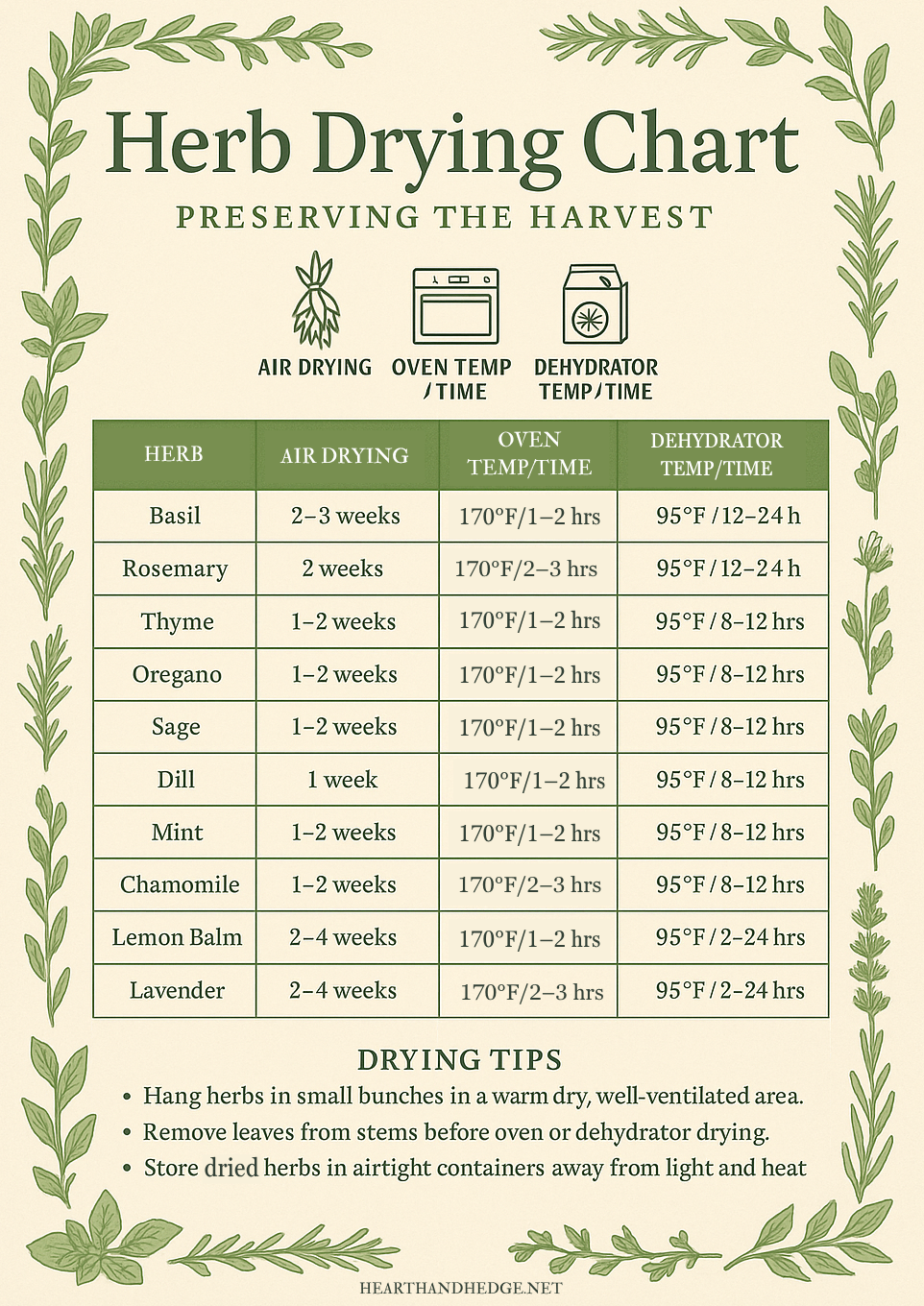
The herb drying printable is a simple reference sheet with drying times and temperatures for all three drying methods.

I just want to say thank you, I have been looking for this type of information for yrs.
I am very glad that it was useful to someone. I understand the difficulty of trying to find specific information like this.