Herbal Remedies for Bug Bites: Salves, Soaks & Natural Bug Repellent
Whether it’s summer evenings in the garden or autumn hikes in the woods, time spent outdoors often comes with an unwelcome side effect: bug bites. Mosquitoes, midges, gnats, fleas, and other biting insects can turn an otherwise peaceful day into an itchy, uncomfortable experience.
While over-the-counter creams can help, many people prefer simple, effective, and natural solutions — especially when you already have the ingredients in your pantry or garden. Herbal remedies for bug bites are time-tested, skin-friendly, and can be prepared in advance so you’re ready when bites happen.
In this guide, we’ll cover the most effective herbs for bug bite relief, step-by-step recipes for herbal salves, soothing soaks, and bug repellent sprays, plus tips for storing and using these remedies safely.
Understanding Bug Bites
Bug bites are essentially your body’s reaction to an insect’s saliva or stinger. When a mosquito bites, for example, it injects saliva that triggers your immune system to release histamines. This causes the redness, swelling, and itching we all know too well.
Common biting insects:
- Mosquitoes
- Blackflies and midges
- Fleas
- Ticks (note: seek medical advice if you suspect a tick bite)
- Horseflies
Most bug bites are mild and can be treated at home with soothing remedies, though it’s always important to recognize when symptoms may require additional care. The Mayo Clinic provides a helpful overview of when to treat bites at home and when to seek medical attention.
When to see a doctor:
- Rapid swelling or difficulty breathing (possible allergic reaction)
- Bites that worsen or show signs of infection
- Tick bites with a bullseye rash or flu-like symptoms
Herbs for Bug Bite Relief
These herbs have been traditionally used to reduce itchiness, swelling, and irritation.
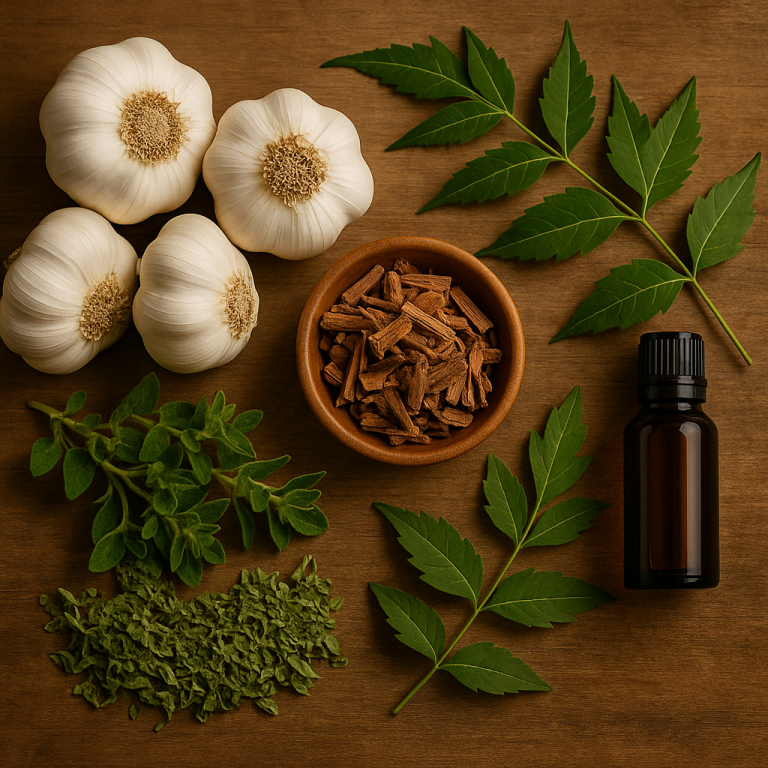
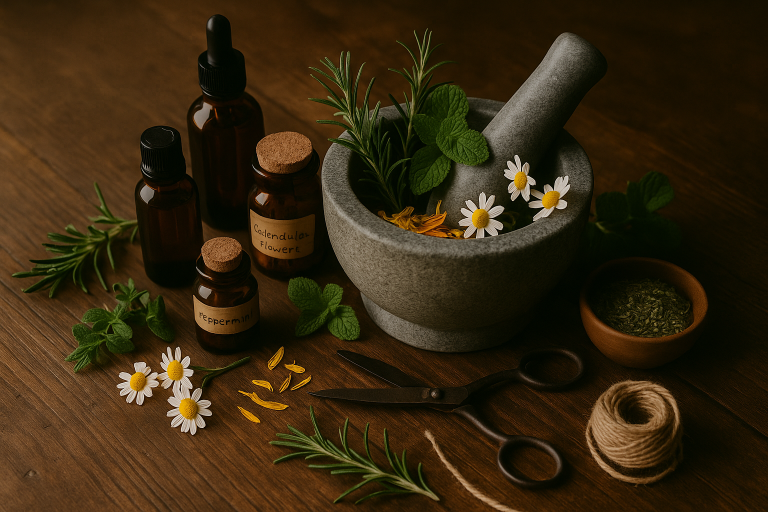
- Chamomile – Anti-inflammatory and soothing; great for calming skin irritation.
- Plantain – Known for drawing out toxins and reducing swelling.
- Lavender – Antimicrobial and calming to the skin; also promotes healing.
- Calendula – Reduces redness and speeds up the healing process.
- Comfrey – Supports skin regeneration and eases discomfort.
- Peppermint – Cools the skin and helps reduce itchiness.
- Neem – Naturally antibacterial and antifungal; also deters insects.
Herbal Remedies for Bug Bites
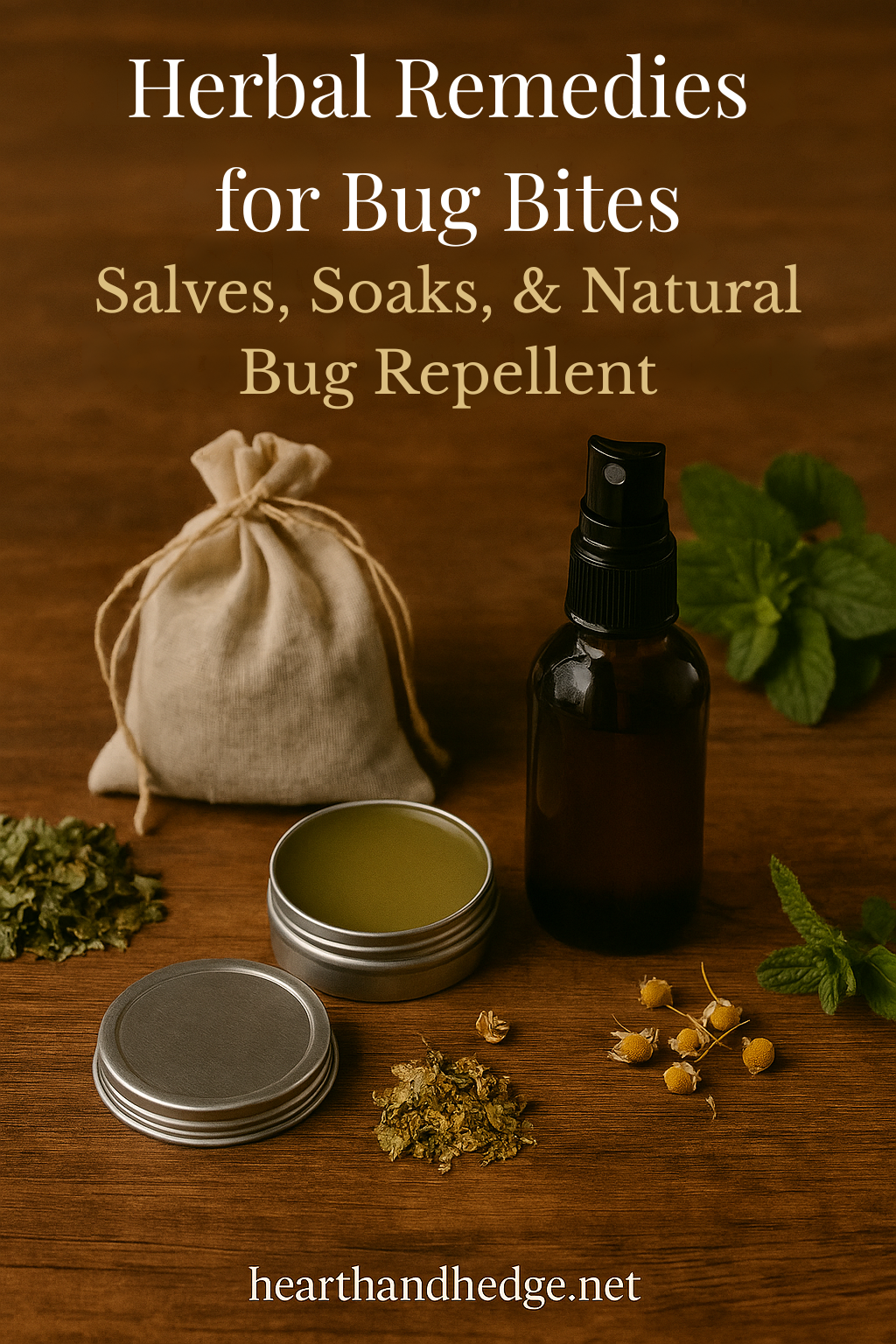
Recipe 1: DIY Herbal Salve for Bug Bites
Ingredients:
- ½ cup herbal-infused oil (plantain, calendula, and lavender work well)
- 1 tablespoon beeswax pellets
- 5–10 drops lavender essential oil (optional)
- Clean, dry tins or small jars for storage
Instructions:
- Make the infused oil: Fill a clean jar with dried herbs and cover with olive or sunflower oil. Let infuse for 2–4 weeks in a cool, dark place, shaking every few days. Strain through cheesecloth. (If you need your salve quickly, check here for accelerated methods to infuse oils.)
- Melt the beeswax: Place infused oil and beeswax in a double boiler and heat gently until melted.
- Add essential oil: Stir in lavender EO after removing from heat.
- Pour & cool: Pour into tins or jars and let cool completely before capping.
Storage: Lasts 6–12 months if kept in a cool, dark place.
Recipe 2: Soothing Herbal Soak
Best for: Multiple bites, sensitive skin, or children.
Ingredients:
- ½ cup rolled oats (finely ground)
- 2 tablespoons dried chamomile flowers
- 2 tablespoons dried calendula petals
- 2 tablespoons dried plantain leaves
- Muslin bag or clean sock
Instructions:
- Combine ingredients: Mix oats and herbs in a bowl.
- Prepare soak: Place mixture in muslin bag or sock and secure.
- Add to warm water: Place in bath or basin, squeeze bag to release the herbal “tea,” and soak affected area for 15–20 minutes.
Tip: For foot or hand soaks, use a smaller basin to concentrate the herbal infusion.
Recipe 3: Herbal Bug Repellent Spray
Ingredients:
- 1 cup distilled water
- ½ cup witch hazel
- 10 drops citronella essential oil
- 10 drops eucalyptus essential oil
- 5 drops lavender essential oil
- 5 drops peppermint essential oil
Instructions:
- Combine: Pour all ingredients into a clean spray bottle.
- Shake: Shake well before each use to distribute the oils.
- Apply: Spray on exposed skin and clothing before going outdoors.
Note: Avoid spraying near eyes and mouth; do not use peppermint EO on children under 6.
Tips for Using Herbal Remedies Safely
- Patch test: Always patch test before applying new herbs or essential oils to the skin.
- Storage: Store remedies in airtight containers away from heat and sunlight to maintain potency.
- Shelf life: Herbal salves last up to 1 year; sprays last 6–12 months; dry herbal blends can last up to 1 year if stored properly.
- Children & pets: Check age-specific safety guidelines for herbs and essential oils.
Building Your Own Herbal First Aid Kit
If you spend a lot of time outdoors, keeping a few ready-made remedies on hand can save time and discomfort. Include:
- A small tin of herbal salve
- A muslin bag with a pre-mixed herbal soak blend
- A travel-sized bug repellent spray
For more info on natural medicine, check our Quick Start Guide.
Bug bites are an inevitable part of spending time in nature, but they don’t have to ruin your day. With a few basic herbs and a little preparation, you can create soothing, effective remedies that help your skin heal and keep future bites at bay.
From quick soaks to long-lasting salves, herbal treatments put you in control of your skin care — naturally. The next time you head outdoors, pack a few of these remedies in your bag and enjoy your time in nature without the itch.