
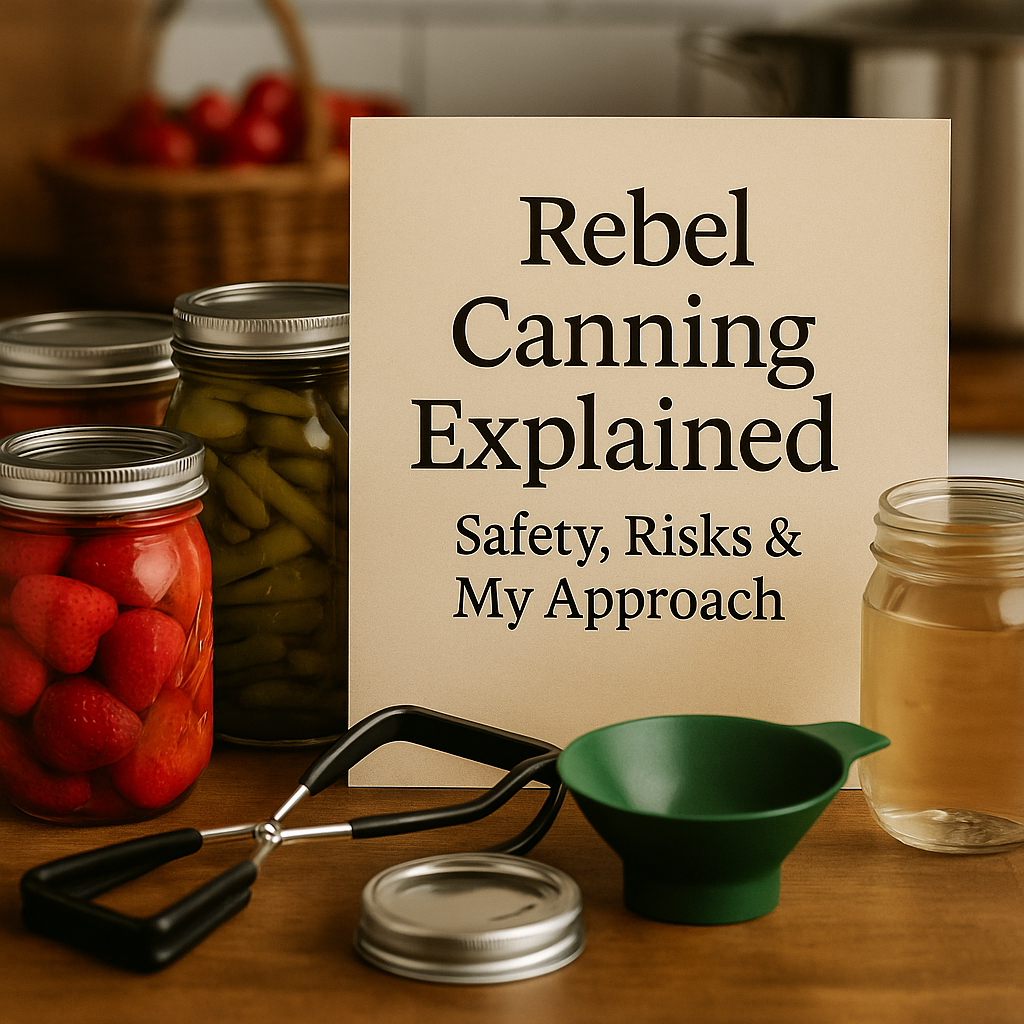
Rebel Canning Explained: Safety, Risks & Common Foods
What is Rebel Canning?
Rebel canning is a term used in the homesteading and food preservation community to describe methods of home canning that intentionally go against the official safety guidelines published by the USDA (United States Department of Agriculture) or the National Center for Home Food Preservation (NCHFP).
This might include altering processing times, changing jar sizes, using recipes that haven’t been tested in a lab, or canning foods the USDA considers unsafe for home canning. While some homesteaders swear by these methods and have used them for years without issue, food safety experts strongly caution against them due to the risk of botulism and other foodborne illnesses.
Disclaimer: This article is for informational purposes only. I am not recommending you practice rebel canning. Any preservation method outside USDA guidelines is done entirely at your own risk. Always do your own research and make the choice that’s right for you and your household.
The Origins of Rebel Canning
The term “rebel canning” gained popularity in online canning groups and forums where home preservers wanted a way to openly discuss and share their non-USDA-approved techniques without judgment.
Historically, many of these methods came from older family traditions — recipes passed down before modern safety testing became common. In some cases, these methods were influenced by regional practices from other countries, where official canning guidelines differ from those in the U.S.
For many, rebel canning isn’t just about preserving food — it’s about preserving independence, traditions, and a self-reliant way of life. That’s part of what makes the conversation around it so passionate.
Why People Choose Rebel Canning
Even knowing the official stance on safety, some people still choose rebel canning for a variety of reasons:
- Texture and Flavor – Certain vegetables or sauces can overcook with USDA processing times, changing their texture or taste. Rebel canners sometimes shorten the time to preserve the original quality.
- Ingredient Flexibility – Some want to adjust sugar, salt, or thickeners in recipes, even when those changes make the recipe untested.
- Convenience – Shorter processing times mean less heat in the kitchen and less time at the stove.
- Heritage Recipes – Some people stick to methods used by parents or grandparents, trusting family history over modern lab testing.
- Skepticism of Regulations – A belief that USDA guidelines are overly conservative or designed with liability in mind rather than practicality.
The Safety Concerns
Rebel canning isn’t just a quirky alternative — it comes with serious risks. The primary danger is botulism, a rare but potentially fatal illness caused by Clostridium botulinum bacteria. These spores can survive improper canning processes and grow in sealed jars without visible signs.
USDA guidelines exist because certain factors — pH, density, jar size, temperature, and processing time — directly affect whether the contents of a jar are safe to eat months later.
Common risky practices in rebel canning include:
- Water bath canning low-acid foods (like green beans or corn)
- Using larger jars than recommended without adjusting time
- Skipping pressure canning for foods that require it
- Adding thickeners (flour, cornstarch) to canned soups or sauces
- Canning dairy or pureed pumpkin
Even experienced canners can’t see, smell, or taste botulism — which is why these methods are considered unsafe by official standards.
Commonly Rebel-Canned Foods
While this isn’t a list of recipes (and should not be followed as instructions), these are some of the foods that often come up in rebel canning discussions:
- Green Beans & Corn – Often water-bath canned instead of pressure canned.
- Thickened Soups & Gravies – Made with flour or cornstarch, which can prevent heat from penetrating evenly.
- Dairy-Based Soups – Such as cream of mushroom or potato soup.
- Salsa with Low Acid – Using fresh peppers/tomatoes without enough vinegar or lemon juice.
- Pumpkin Puree – Too dense for safe home canning in jars.
These foods are all considered unsafe for water bath canning and require strict pressure canning methods — if they can be safely canned at all.
Safer Alternatives
For those who love the idea of preserving these foods but don’t want to take the risk, there are safe alternatives:
- Freezing – Works for dairy-based soups, pumpkin puree, and many vegetables without compromising texture.
- Dehydrating – Removes moisture to prevent bacterial growth and can be done for many vegetables, fruits, and herbs.
- Safe Pressure Canning Recipes – Use tested recipes from sources like the USDA Complete Guide to Home Canning or the Ball Blue Book.
- Adjusting Seasonings, Not Core Ingredients – You can often tweak spices, herbs, and small flavor elements without affecting safety.
If you’re new to preserving food and want to start with USDA-approved methods, check out our guide on canning for complete beginners.
Cultural & Community Debate
Rebel canning often sparks lively discussions in homesteading groups. Some see it as a matter of personal freedom and self-responsibility, while others believe that encouraging unsafe methods puts the community at risk.
If you choose to participate in these conversations online, be prepared for mixed reactions. And if you decide to try rebel canning yourself, do so with a full understanding of the risks — and without sharing unsafe instructions that could endanger others.
Conclusion
Rebel canning is a fascinating and controversial part of the food preservation world. While it can be tempting to follow tradition or personal preference, it’s important to weigh those choices against proven safety science.
Whether you choose to follow USDA guidelines to the letter or explore rebel methods, the most important thing is making an informed decision for yourself and your family.
FAQ
Is rebel canning illegal?
No, it’s not illegal in the United States. However, it’s strongly discouraged by food safety authorities.
Why do some people rebel can?
They may want to preserve texture, reduce processing time, or follow heritage recipes passed down through family traditions.
What foods are most often rebel canned?
Low-acid vegetables, dairy-based soups, thickened sauces, and purees like pumpkin are common examples — all considered unsafe by USDA standards for water bath canning.
What’s the difference between rebel canning and safe canning?
Safe canning follows lab-tested recipes and processing times from trusted sources like the USDA or Ball, while rebel canning changes those variables in untested ways.
Affiliate Disclosure:
Hearth & Hedge participates in the Amazon Associates Program and other affiliate programs, meaning we may earn a small commission on qualifying purchases made through our links. This comes at no extra cost to you and helps support the work we do here. We only recommend products we personally use or believe will be helpful to our readers.



I love to can meats and vegetables, dehydrate and freeze foods but sometimes I would like to add a little extra to the jars for taste but don’t know how much because I have read that things like onion, garlic etc can get overwhelming if canned with vegetables or some meats. I’m sure I will learn a lot!
It’s safe to add vegetables to your meat, you just have to be mindful of how much you add. I’ve seen plenty of USDA approved beef stew recipes that include onions and garlic. In my experience, if I cook it first it comes out tasting just the same after its been canned.