Canning for Beginners: Water-Bath vs. Pressure Canning
Home canning uses tested heat-processing methods to make certain foods shelf-stable. The first decision is not which jar looks cutest; it is whether the food requires a boiling-water canner or a pressure canner.
This beginner guide explains the two methods, basic equipment, recipe safety, and common mistakes. Start with a tested high-acid recipe rather than improvising with whatever happens to be sitting on the counter.
What Is Canning?
Canning is a method of food preservation that uses heat to kill microorganisms and create a vacuum seal. When done properly, this prevents spoilage and allows shelf-stable storage of fruits, vegetables, sauces, and more—no refrigeration required.
There are two types of home canning:
- Water bath canning: Used for high-acid foods like fruits, pickles, jams, and jellies.
- Pressure canning: Required for low-acid foods like vegetables, meats, and broths to prevent botulism.
If you’re brand new, start with water bath canning. It’s beginner-friendly, inexpensive to try, and perfect for garden harvests and seasonal bulk produce.
Why Canning Is Worth Learning
If you’re here, you’re probably already aligned with slow living, self-reliance, and seasonal rhythms. Canning fits naturally into all of that. Here’s what it gives you:
- Less food waste — Don’t let extra tomatoes, cucumbers, or berries rot.
- Pantry security — Have sauces, soups, and sides ready for lean months.
- Control over ingredients — No preservatives, no dyes, just real food.
- Seasonal connection — You eat what’s growing now and enjoy it later.
- Satisfaction — Nothing hits like opening a jar you canned yourself.
And yes, it’s a little bit of a ritual—washing jars, simmering jam, wiping rims, sealing lids. This is kitchen alchemy with tangible results.
What You Need to Start Canning
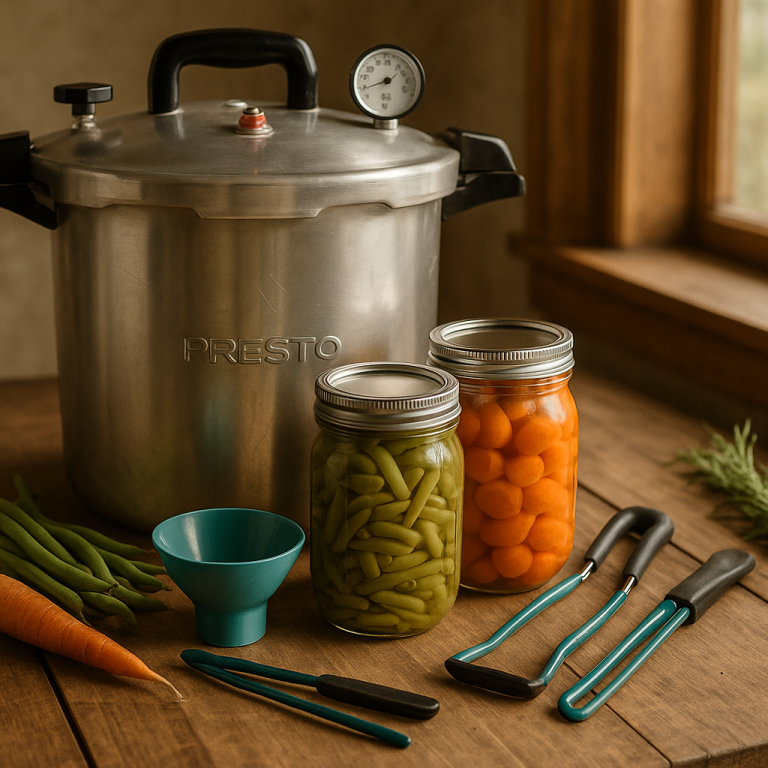
You don’t need to buy a bunch of specialized gear to begin. Start with water bath canning and gather the following:
Basic Equipment
- Large pot with a lid (deep enough to submerge jars by at least 1–2 inches)
- Canning rack or towel (to keep jars from rattling on the bottom)
- Canning jars with new lids and rings (Mason, Ball, or Kerr brands work great)
- Jar lifter (helps you handle hot jars safely)
- Funnel (makes filling jars easier and less messy)
- Bubble remover/headspace tool (optional but handy)
You can find starter kits with most of these tools at hardware stores, farm supply shops, or online.
Ingredients and Recipes
Use tested canning recipes only. Safe acidity and processing times matter. Trusted sources include:
- Ball’s Blue Book Guide to Preserving
- The National Center for Home Food Preservation
- Local extension offices or university-tested recipes
Never improvise a recipe or guess at canning times. That’s how people get sick.
The Difference Between Water Bath and Pressure Canning
It’s important to match the method to the acidity of the food you’re preserving:
| Food Type | Canning Method | Examples |
| High-acid | Water bath | Fruits, jams, jellies, pickles |
| Low-acid | Pressure canning | Green beans, corn, meats, soups |
Acidity determines how heat-resistant bacteria behave. Botulism, a serious toxin, thrives in low-acid environments unless high enough temperatures are reached—only possible with a pressure canner.
If you’re only canning fruit-based recipes or pickles, you can avoid pressure canning entirely at first.
Step-by-Step Guide: Water Bath Canning for Beginners
Let’s walk through the full process of canning a high-acid food like jam or tomato sauce. This is your foundation for most beginner projects.
1. Prep Your Workspace
- Clear a large, clean counter space.
- Wash jars, lids, and rings in hot soapy water.
- Sterilize jars by simmering them in your canning pot for 10 minutes or running them through a dishwasher cycle.
2. Prepare Your Recipe
Follow your chosen canning recipe closely. Simmer your jam, sauce, or pickle brine according to the instructions.
3. Fill the Jars
- Use your funnel to fill each jar, leaving the correct headspace (usually ¼” for jams and ½” for pickles).
- Remove air bubbles by sliding a chopstick or bubble remover tool down the inside edges of the jar.
- Wipe jar rims with a clean, damp cloth.
4. Add Lids and Rings
- Center the lid on the jar.
- Screw on the ring until it’s fingertip-tight—don’t overtighten.
5. Process the Jars
- Lower the jars into your boiling water bath, ensuring they’re fully submerged with 1–2 inches of water above them.
- Cover with lid and boil for the time stated in the recipe. Use a timer.
Altitude note: If you live above 1,000 feet elevation, adjust your processing time. Refer to a safe canning chart.
6. Cool and Store
- Once processed, use your jar lifter to remove jars and place them on a towel-lined surface.
- Let them cool undisturbed for 12–24 hours.
- Check seals: the lid should not flex up and down. If it does, store the jar in the fridge and use within a week.
- Label sealed jars with the contents and date. Store in a cool, dark place.
Beginner Recipes to Try First
- Strawberry jam (classic and forgiving)
- Tomato salsa (use a tested recipe with lemon juice added)
- Applesauce (can be sweetened or unsweetened)
- Dill pickles (quick pickles that process well)
- Peach preserves (high sugar = good sealing and shelf life)
Stick to one batch at a time until you get the hang of it.
Check out our free Canning Cheat Sheet for USDA approved processing times of commonly canned foods.
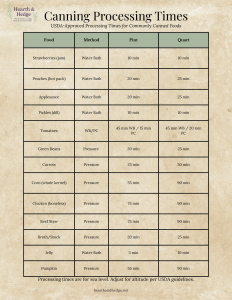
Canning Cheat Sheet PDF
A print-friendly version with a white background can also be found in the library.
Common Mistakes Beginners Should Avoid
Even though canning is straightforward, there are a few things that trip people up:
- Using old or untested recipes – Always use recipes that have been tested for safety.
- Skipping the acid – Some foods (like tomatoes) need added lemon juice or citric acid.
- Overfilling or underfilling jars – Incorrect headspace can lead to seal failure.
- Not adjusting for altitude – Higher elevations need longer processing times.
- Touching lids too soon – Let jars cool undisturbed to ensure proper sealing.
When in doubt, look it up. Your extension office or a reputable canning book can save your batch (and your health).
How to Know Your Canned Food Is Safe
- The lid is firmly sealed and doesn’t pop when pressed.
- There are no leaks, bulging, or strange odors.
- The recipe was processed using the correct time and method.
- You followed all steps as written, without altering ingredients or measurements.
When properly sealed and stored, home-canned food is shelf-stable for up to a year or more.
Start With One Tested Recipe
You do not need to fill a pantry in one weekend. Choose one current recipe from the USDA, the National Center for Home Food Preservation, or a university extension service and follow it exactly.
Once you understand jar preparation, headspace, processing time, altitude adjustments, and seal checks, the process becomes much less intimidating. The goal is safe food, not a heroic jar count.
A Note on Rebel Canning
If you hang around canning circles long enough, you’ll hear the term rebel canning. This refers to preserving foods or using methods that go outside of what’s officially recommended by the USDA or extension offices. Think things like dry canning, steam canning without approved recipes, or canning items like butter, milk, or puréed pumpkin that haven’t been tested for safety.
To be transparent: I do use some rebel canning recipes in my own kitchen—usually based on trusted traditions, small-batch methods, or peer-reviewed science that hasn’t yet made it into USDA guidelines. That said, I’m not here to tell you what to do with your pantry or your risk tolerance.
If you choose to explore rebel canning, do so at your own risk. Understand the potential dangers, especially when canning low-acid foods without a pressure canner. Botulism is rare but serious, and it doesn’t come with a warning smell or taste.
For beginners, I always recommend starting with safe, tested recipes from reliable sources. Once you’re more experienced—and have done your research—you can decide how far you want to stray from the rulebook.
Want more beginner-friendly homesteading skills?
Subscribe to the Hearth & Hedge newsletter for seasonal recipes, herbal know-how, and homegrown wisdom.
Affiliate Disclosure:
Hearth & Hedge participates in the Amazon Associates Program and other affiliate programs, meaning we may earn a small commission on qualifying purchases made through our links. This comes at no extra cost to you and helps support the work we do here. We only recommend products we personally use or believe will be helpful to our readers.