Beginner’s Guide to Pressure Canning Vegetables
Why Pressure Canning?
If you’ve only tried water bath canning for things like jam or fruit, pressure canning vegetables can feel like a big step up. It sounds more technical. A little more serious.
But here’s the reality—if you want to safely preserve vegetables, pressure canning isn’t optional. It’s required.
Low-acid foods like green beans, carrots, corn, and most mixed vegetables need higher temperatures than boiling water can reach. Without that higher heat, harmful bacteria can survive—and that’s where the risk comes in.
This guide walks you through pressure canning in a way that’s straightforward and practical. No overwhelm, no unnecessary complexity—just what you actually need to know to get started.
Why Pressure Canning Matters
When you’re canning high-acid foods (like tomatoes or fruit), acidity helps prevent dangerous bacteria from growing.
Vegetables don’t have that built-in protection.
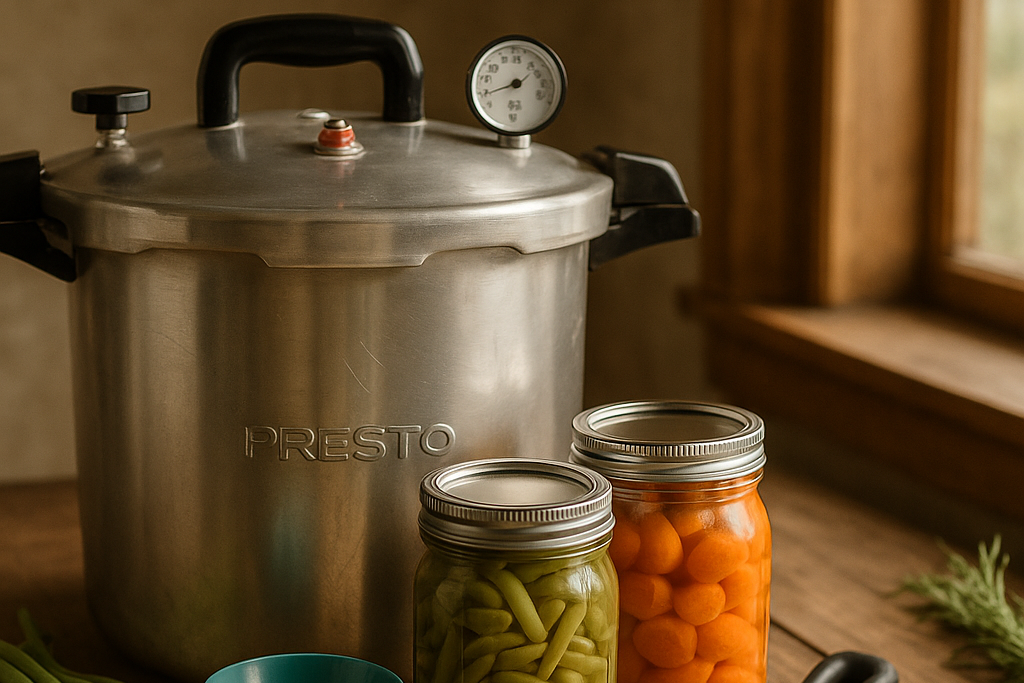
They require temperatures of 240–250°F, which can only be reached inside a pressure canner. This level of heat is necessary to destroy Clostridium botulinum, the bacteria responsible for botulism.
That might sound intimidating, but once you understand the process, it becomes routine.
What You Need to Get Started
You don’t need a full homestead setup to begin. A simple, reliable setup is enough.
Essential Equipment
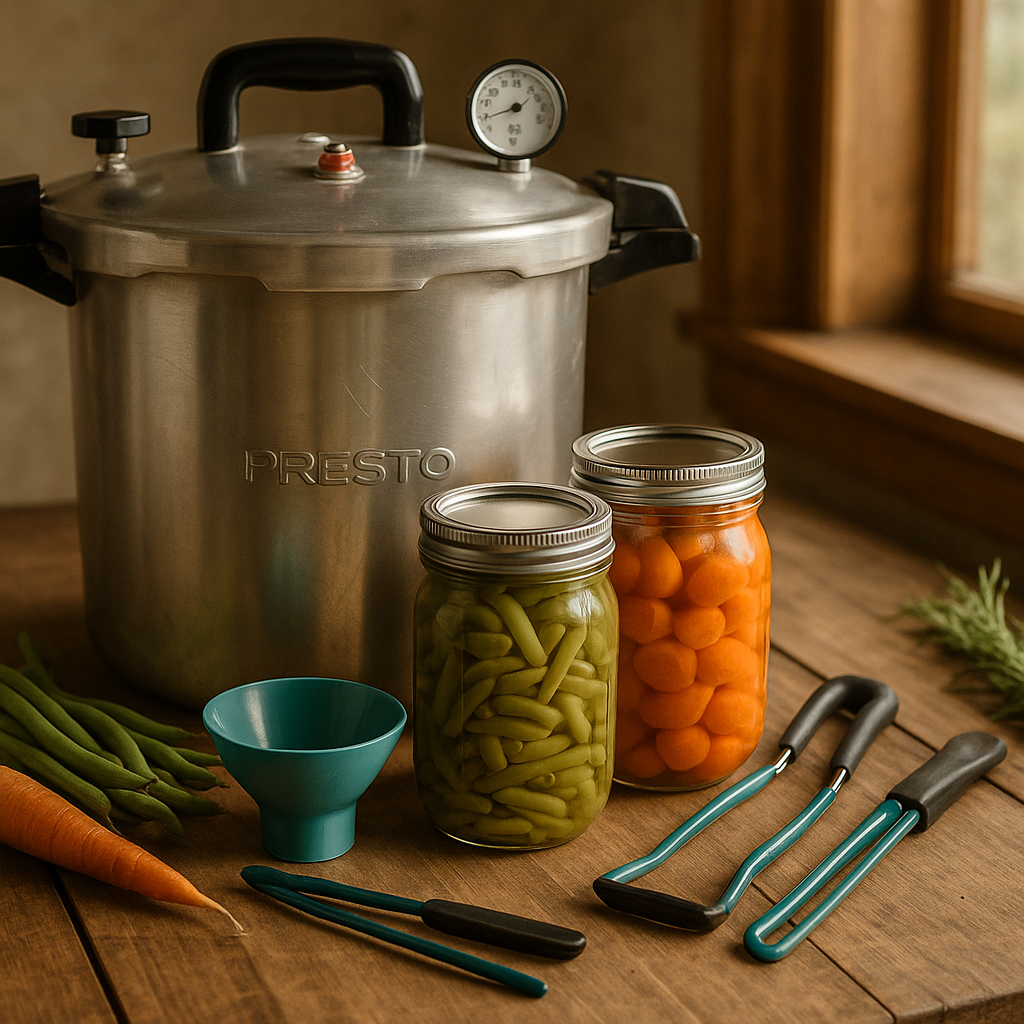
- Pressure canner
Not the same as a pressure cooker. You’ll want a proper canner with either a dial gauge or weighted gauge.
I use an electric pressure canner to simplify things. - Canning jars (Mason jars)
Use jars specifically made for canning—pints or quarts are standard. - Lids and bands
Flat lids must be new each time. Bands can be reused. - Jar lifter
For safely moving hot jars - Canning funnel
Makes filling much easier (and less messy) - Bubble remover / headspace tool
Helps release trapped air and measure correctly
See my canning for beginners guide for a full breakdown of tools and setup.
Step-by-Step: How to Pressure Can Vegetables
1. Choose and Prep Your Vegetables
Start with fresh, firm produce.
- Wash thoroughly
- Peel if needed
- Cut into uniform sizes
Some vegetables require blanching, while others can be raw packed. Always follow a tested recipe for specifics.
2. Prepare Your Jars
Wash jars, lids, and bands in hot soapy water.
Keep jars warm before filling:
- simmering water
- or dishwasher
This helps prevent cracking when hot food is added.
3. Fill the Jars
- Pack vegetables (raw or hot pack)
- Add boiling liquid (water, broth, or brine)
- Leave 1 inch headspace (most vegetables)
Remove air bubbles and wipe the rims clean before adding lids.
Tighten bands fingertip-tight—not too loose, not overly tight.
4. Prepare the Pressure Canner
Add about 2–3 inches of water (check your specific model).
Place jars inside on the rack, leaving a little space between them.
5. Vent the Canner (Don’t Skip This)
Lock the lid, but leave the vent open.
Heat until steam escapes steadily, then vent for 10 minutes.
This step removes trapped air and ensures accurate pressure.
6. Process at the Correct Pressure
Close the vent or add the weight.
Bring the canner up to pressure:
- usually 10–15 PSI, depending on altitude
Once it reaches pressure, start your timer.
Processing times vary widely—anywhere from 20 to 90 minutes.
If pressure drops at any point, you must bring it back up and restart timing.
7. Let It Cool Naturally
When time is up:
- turn off heat
- let pressure return to zero on its own
Do not force it open.
Once safe, remove jars carefully.
8. Check Your Seals
Let jars sit undisturbed for 12–24 hours.
Check:
- lid is slightly concave
- no popping when pressed
If a jar didn’t seal, refrigerate and use within a week.
Altitude Adjustments
If you live above 1,000 feet, you’ll need to increase pressure (or processing time) to ensure safety. Most canning books provide altitude charts—always adjust for your elevation. This is not optional—under-processing can make food unsafe.
Quick Safety Reminders
- Only use tested recipes. The USDA, Ball, or your local extension office are great sources.
- Never thicken or puree vegetables before canning. Dense foods don’t heat evenly.
- Don’t skip venting. It’s critical for removing trapped air.
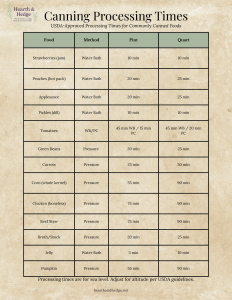
For a handy reference, grab our Canning Cheat Sheet—it lists approved methods and processing times for common vegetables.
Common Beginner Mistakes
- Confusing a pressure canner with a pressure cooker. They are not the same. Do not use a pressure cooker. The Nesco electric canner I linked above is designed to do both, but that is not usually the case.
- Overfilling jars. Always leave the recommended headspace.
- Skipping adjustments for altitude. A small oversight that can ruin your batch.
- Not replacing lids. Flat lids are single-use only.
- Not wiping rims. Residue on the mouth of the jar can prevent the jar from sealing properly or create a false seal.
Storage & Shelf Life
Store sealed jars in a cool, dark place. Properly canned vegetables can last 12–18 months. Label each jar with the date so you can rotate your stock.
Note for rebel canners: If you are dipping into the rebel canning practice, the general consensus of the community is that as long as the seal is good the contents are safe. If you choose this method PLEASE make sure your seals are good.
Pressure canning doesn’t have to be intimidating. With the right tools and a clear guide, you can safely preserve your garden harvest—or bulk market buys—for the winter ahead. Start simple, follow tested recipes, and let the process become as grounding and satisfying as filling your pantry shelves.