
How to Make Moon Water Safely, Step by Step
A practical step-by-step method
Why Make Moon Water?
Moon water is water placed outside or on a windowsill during a chosen moon phase and kept for symbolic or ritual use. The physical process is ordinary; the meaning comes from the timing and intention you assign to it.
This guide covers the basic method, safe storage, phase timing, and practical ways to use a batch. You do not need direct moonlight, special water, or elaborate supplies.
What Is Moon Water?
Moon water is exactly what it sounds like: water that has been charged under the light of the moon.
In many magical traditions, the moon is associated with emotions, intuition, cycles, and transformation. Charging water under its glow allows you to infuse it with lunar energy, which you can later use for:
- Cleansing tools or altar spaces
- Adding energy to rituals and spells
- Watering plants with intention
- Self-care practices like baths or teas
- Journaling and meditation prompts
It’s not about rigid rules or complex ceremonies. At its core, moon water is a folk practice — a simple, personal way to connect with the rhythms of nature.
What You’ll Need
You don’t need much to make moon water. In fact, that’s part of the beauty.
Basic supplies:
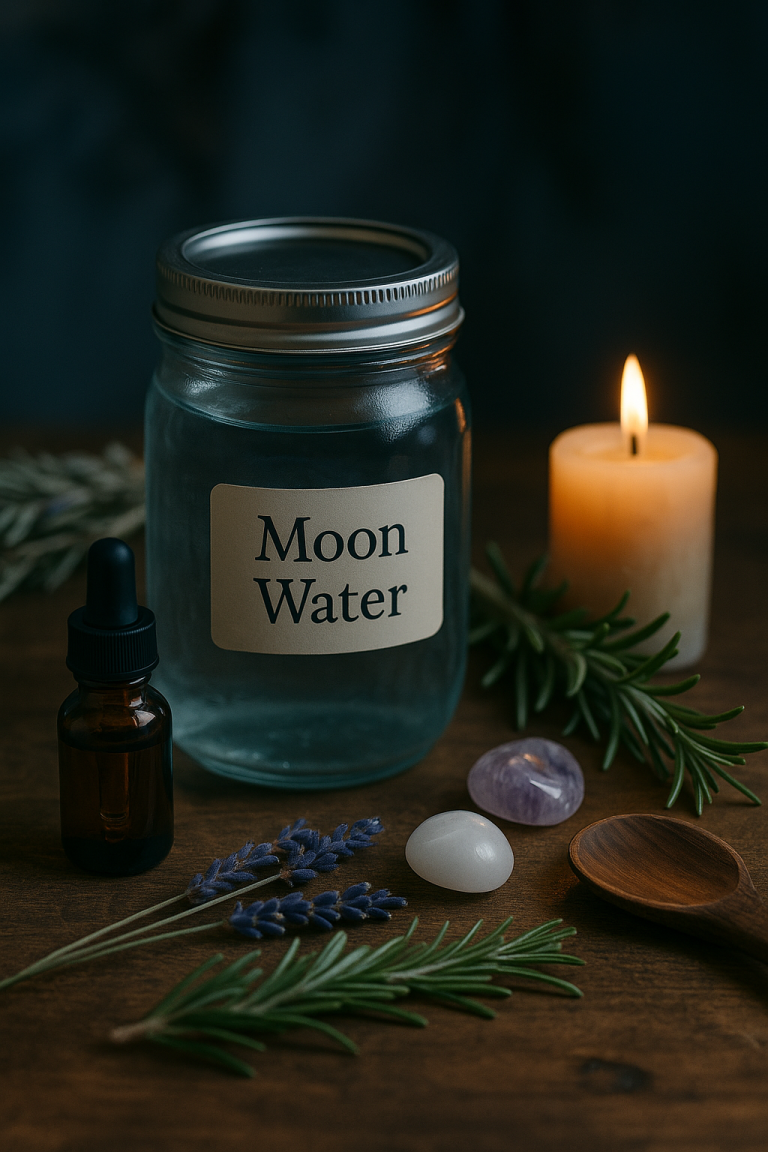
- A clean glass jar (mason jars work well) with a lid
- Fresh water (filtered, spring, or tap — whatever feels right to you)
Optional extras:
- Crystals (if water-safe — like clear quartz, moonstone, or amethyst)
- Herbs (lavender, mint, or lemon balm for teas or baths)
- A label for noting the moon phase and date
- A decorative touch: cloth, ribbons, or symbols that align with your intention
How to Make Moon Water: Step-by-Step
This is a beginner-friendly guide — no elaborate tools, no complicated ritual. Just simple steps with intention.
- Choose your moon phase. (More on this below.)
- Fill your jar with clean water and, if you like, add herbs or a crystal.
- Set your intention. Hold the jar and focus on what you want this water to represent — healing, release, protection, or clarity.
- Place the jar in moonlight. Outdoors is ideal, but a windowsill works too.
- Leave it overnight. From moonrise to sunrise is perfect, but even a few hours will do.
- Seal and store. In the morning, cover your jar and keep it in a cool, dark place. Label it if you plan to build a collection.
That’s it — no theatrics needed. The magic is in your intention.
When Is the Best Time to Make Moon Water?
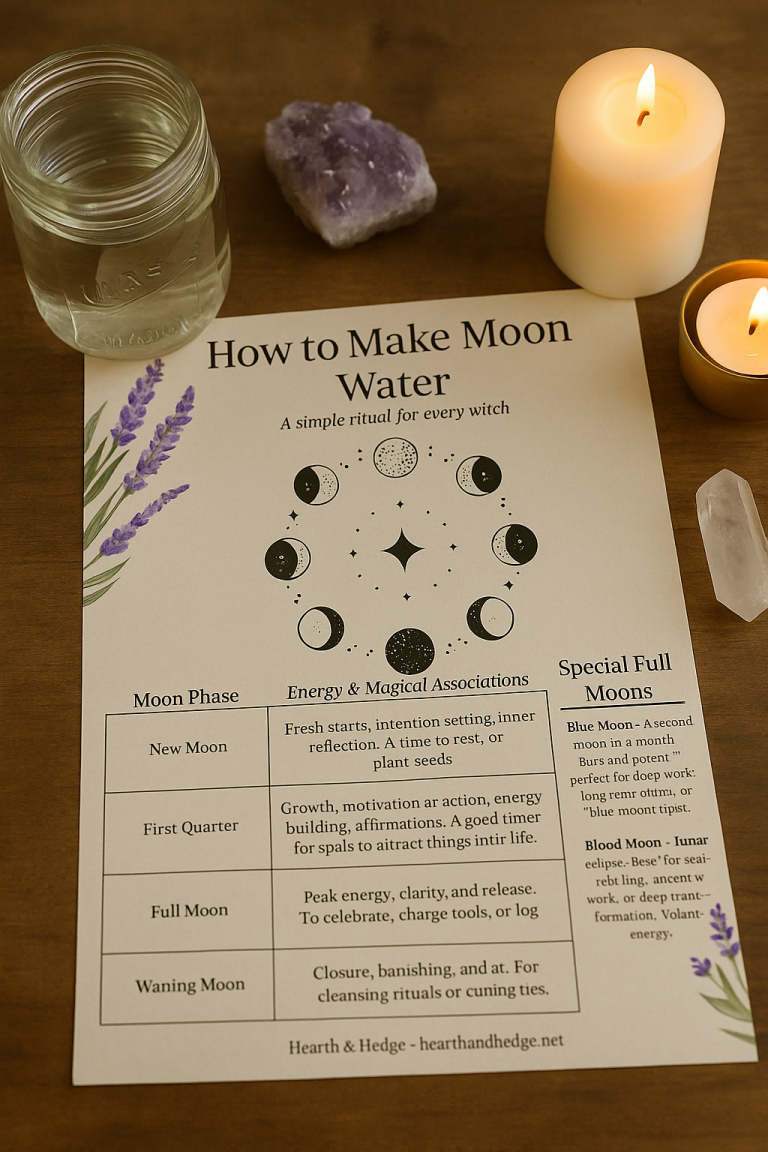
You can make moon water under any moon phase — each brings different energy.
New Moon: Beginnings & Fresh Starts
The new moon is a blank slate, perfect for setting intentions and starting new projects.
- Ritual Idea: Write your intentions on a slip of paper and place it under your jar while it charges.
- Astrology Tie-In: When the new moon is in Cancer, focus on emotional healing. In Capricorn? Set intentions for discipline and structure.
- Use It For: Journaling prompts, anointing your altar tools for a new cycle, or watering seedlings.
Waxing Moon: Growth & Attraction
As the moon grows, so does your momentum. This phase is excellent for building energy, drawing opportunities, and manifesting abundance.
- Ritual Idea: Add a pinch of mint (for prosperity) and basil (for success) to your jar.
- Astrology Tie-In: A waxing moon in Taurus is perfect for financial intentions, while one in Gemini favors communication goals.
- Use It For: Anointing candles for manifestation, charging crystals, or adding to prosperity jars.
Full Moon: Illumination & Release
The full moon is the most popular time for making moon water because its energy is at its peak. It’s ideal for cleansing, reflecting, and recharging.
- Ritual Idea: Charge a large batch and use it to create a cleansing spray for your altar or home.
- Astrology Tie-In: A full moon in Pisces supports emotional release, while one in Leo encourages confidence and self-expression.
- Use It For: Ritual baths, scrying bowls, or adding to teas for emotional balance.
Waning Moon: Letting Go & Rest
As the moon shrinks, its energy turns inward. This phase supports release, rest, and closure.
- Ritual Idea: Use waning moon water in a cord-cutting ritual or to cleanse your living space after decluttering.
- Astrology Tie-In: Waning moons in Scorpio are potent for shadow work, while in Virgo they support organizational clearing.
- Use It For: Banishing rituals, cleansing tools of stagnant energy, or journaling for emotional release.

Learn the best time to make moon water based on the moon’s phase and your intention.
Special Moons: Harnessing Unique Energy
Beyond the regular cycle, some moons carry extra symbolic weight.
- Blue Moon: A rare second full moon in a month. Folklore associates it with once-in-a-lifetime opportunities. Perfect for big manifestations or setting intentions for long-term goals.
- Blood Moon: A total lunar eclipse, often linked to transformation and shadow work. Some witches avoid using this energy due to its intensity; others embrace it for deep, internal changes. If the eclipse is only partial, see my partial lunar eclipse guide for the difference and moon-water options.
- Harvest Moon: Closest to the autumn equinox — an ideal time for gratitude, harvest rituals, and grounding work. Use it to bless food or water your garden as an offering of thanks.
- Supermoon: Appears larger and brighter, amplifying all lunar energy. Great for high-impact rituals and supercharging tools.
Cultural & Historical Roots of Moon Water
While the modern witchcraft community has popularized moon water, the idea of charging water with celestial energy is much older.
- Ancient Greece & Rome: Lunar deities like Selene and Diana were honored with offerings of water and milk.
- European Folk Traditions: Water collected under the moon was believed to enhance fertility or ward off illness.
- Ayurvedic Practices: Moon-charged water (known as Chandra Jala) is still used for cooling the body and balancing emotions.
By making moon water today, you’re continuing a tradition that’s spanned cultures and centuries.
Seasonal & Environmental Considerations
- Winter: Place your jar on a windowsill to avoid freezing or partially bury it in snow for symbolic “sleeping” energy.
- Summer: Watch for evaporation if leaving jars outside overnight.
- Cloudy or Rainy Nights: No problem — the moon’s energy still reaches your water.
- Align with Sabbats: Charge moon water on nights near Wheel of the Year festivals (like Beltane for fertility or Samhain for ancestor work).
Creative & Advanced Ways to Use Moon Water
Your moon water doesn’t need to sit on a shelf — put it to work:
- Ritual Bath Blend: Combine 1–2 cups of moon water with Epsom salts, dried lavender, and a few drops of chamomile oil. Use during full moon rituals for cleansing.
- Gratitude Tea: Brew a mild tea with moon water, lemon balm, and honey. Drink while journaling about what you’re thankful for.
- Cleansing Spray: Mix moon water with rosemary and sage essential oils. Use to cleanse altar tools or refresh your sacred space.
- Crystal Charging Bowl: Fill a bowl with moon water and place water-safe crystals in it to cleanse and charge them.
For more ideas see 9 Creative Ways to Use Moon Water.
Keeping a Moon Water Journal
To deepen your practice, keep a simple journal of your moon water creations.
- Track the date, moon phase, and your intention.
- Note how you used the water and what you experienced.
Over time, you’ll see patterns emerge — certain moons may support specific goals or bring about noticeable changes.
The Hearth & Hedge Moon Ritual Journal includes a moon water collection log as well as other moon ritual journaling pages and worksheets.
Recommended Tools for Your Ritual
Pretty Storage Jars: Glass moon phase jars make your moon water ritual feel more special.
Water-Safe Crystals: Clear quartz, amethyst, and moonstone are safe options.
If you’re adding crystals to your moon water, it’s important to choose stones that are physically and energetically stable in water. Thought in Motion provides a helpful breakdown of both safe crystals like clear quartz, rose quartz, and amethyst, and which ones to avoid like selenite and pyrite.
Herbs for Ritual Use: Food-safe herbs like mint, lavender, and lemon balm add extra energy to your moon water.
How Long Does Moon Water Last?
Stored in a sealed container in a cool, dark space, moon water stays potent for about a month. Refresh it regularly to maintain its energy.
FAQs: Moon Water
Can I make moon water through a window?
Yes — as long as some moonlight reaches it.
Can I drink moon water?
Absolutely — but only if made with clean, food-safe water and herbs. Skip crystals unless you’re certain they’re non-toxic.
Can I make moon water during an eclipse?
Some witches do, others avoid it. If you choose to, set a strong, protective intention.
Does it work if it’s cloudy or raining?
Yes. The moon’s energy still reaches us, even when obscured.
Making moon water isn’t about perfection. It’s about slowing down, connecting with the moon, and infusing intention into something as simple as water.
Use moon water where it fits your practice: in a ritual, for external cleaning, in the garden, or simply as a labeled reminder of the phase. The jar does not need to become precious, permanent, or mysterious.
Can I make moon water during the day? The moon is passing over my area from morning until about 8:30 tonight. 7/13/26.
Thank you,
Susan, first time moon water maker
Yes, you can! The moon is still present during daylight, even when you cannot see it clearly. If it is above the horizon, you can place your covered jar outside or on a windowsill for a few hours. Overnight moonlight is traditional, but it is not a strict requirement—the intention behind the practice matters more than getting the timing perfect.
Welcome to making moon water, Susan! 🌙