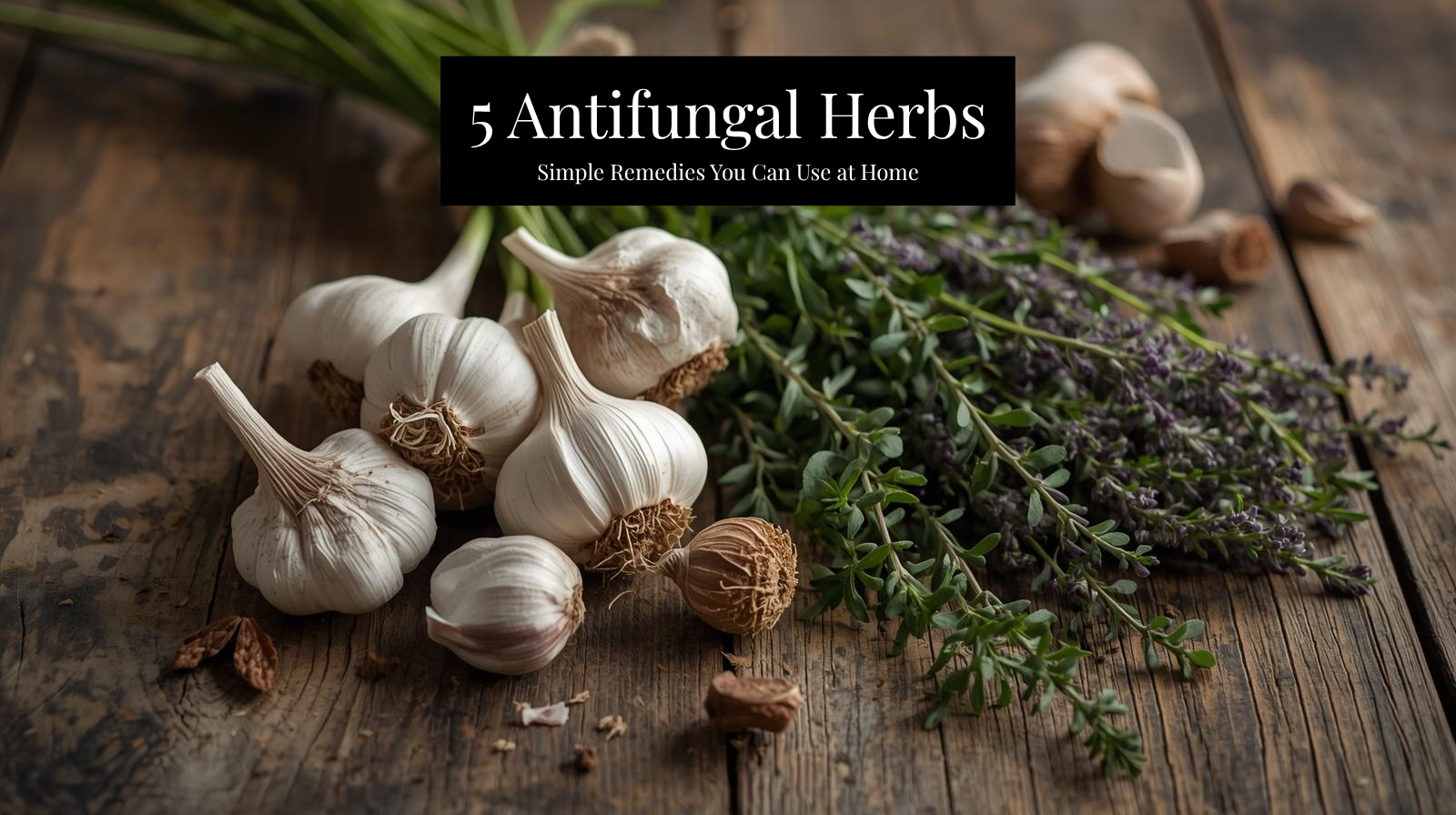
5 Antifungal Herbs for Everyday Use
Why Use Antifungal Herbs?
Plants described as “antifungal” may show activity in laboratory studies or have a history in household preparations. That does not automatically mean an herb will treat an infection in a person.
The good news is that you don’t need a complicated apothecary to get started. Many antifungal herbs are already sitting in your kitchen or medicine cabinet—you just need to know how to use them.
Focusing on simple, accessible options makes it easier to build a routine you can actually stick with.
Note: This article is for informational purposes only and not a substitute for medical advice. Always consult your healthcare provider before starting new treatments—especially if you have chronic conditions or are pregnant.
What Causes Fungal Issues?
Fungi commonly grow in warm, damp environments. Skin, nail, scalp, and internal infections are different conditions and may require different diagnoses and treatments.
Common issues include:
- Toenail fungus
- Athlete’s foot
- Scalp irritation
- Yeast imbalances
Good hygiene and keeping affected areas dry can help, but herbs should not be presented as guaranteed infection treatments.
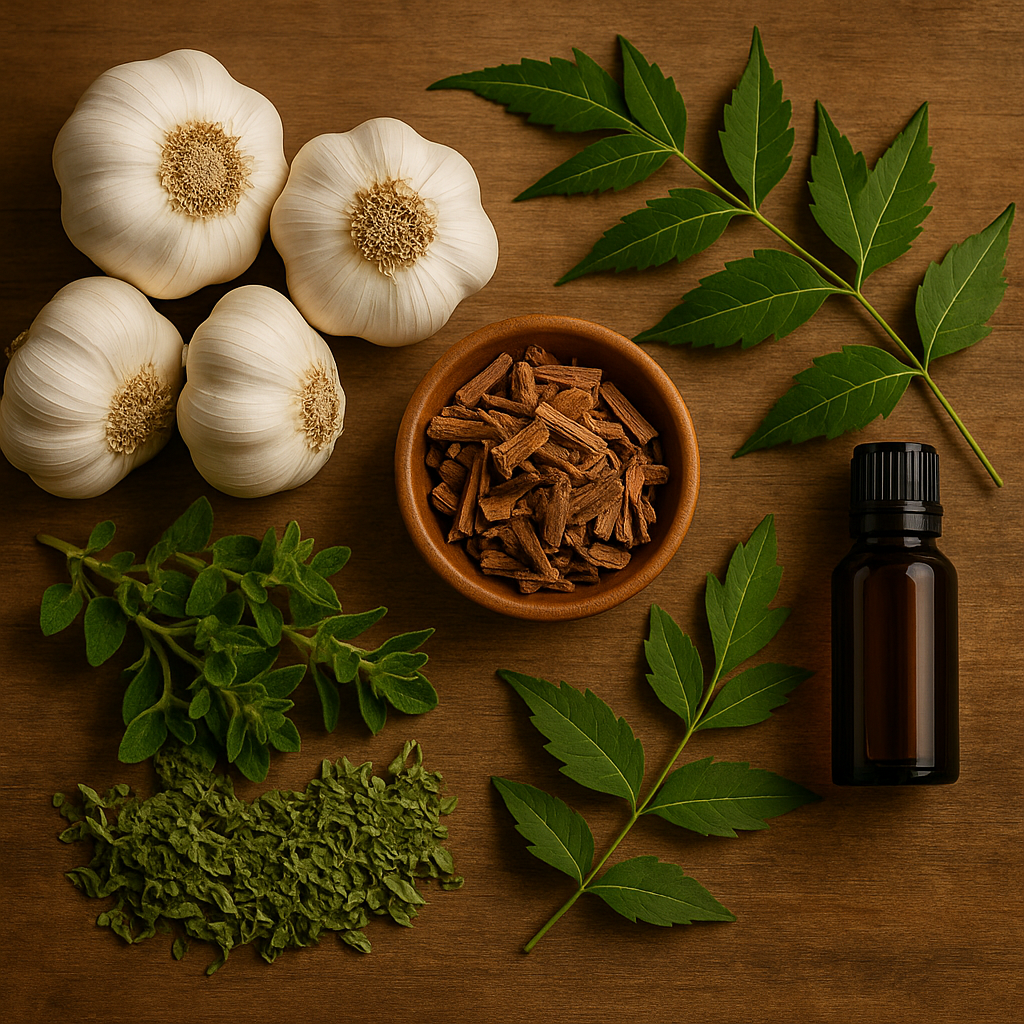
1. Garlic (Allium sativum)
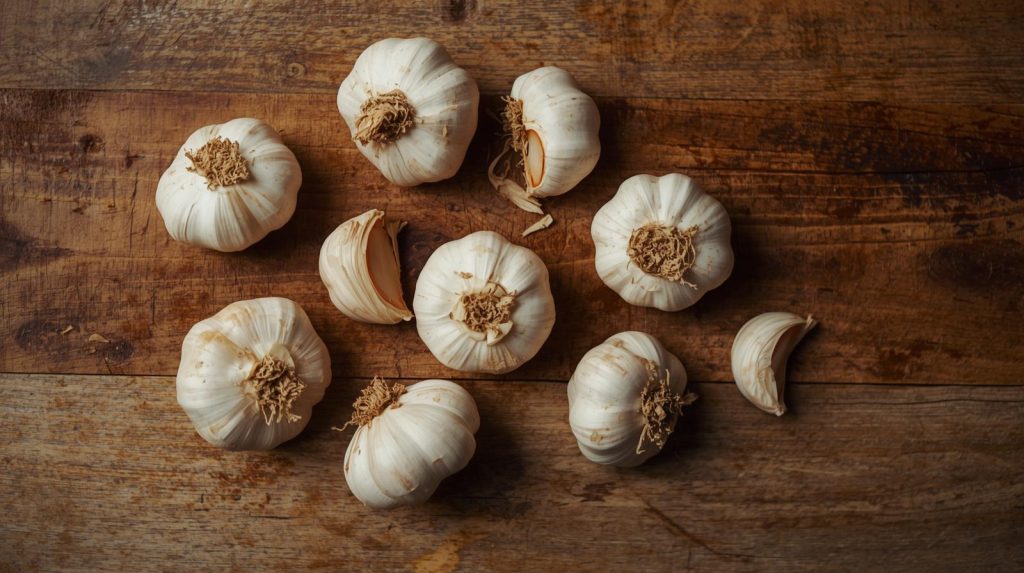
Garlic is one of the most widely used natural antifungal herbs—and one of the easiest to incorporate into daily life.
Freshly crushed garlic produces allicin, which shows antifungal activity in laboratory research. That does not prove that eating garlic or applying it to skin will clear an infection.
Because garlic blends so easily into meals, it’s one of the simplest ways to get steady, ongoing support without adding extra steps.
How to use it:
- Add raw or lightly cooked garlic to meals
- Do not place raw garlic on skin; it can cause significant irritation or chemical burns
- Check with a clinician or pharmacist before using concentrated garlic supplements
2. Tea Tree (Melaleuca alternifolia)
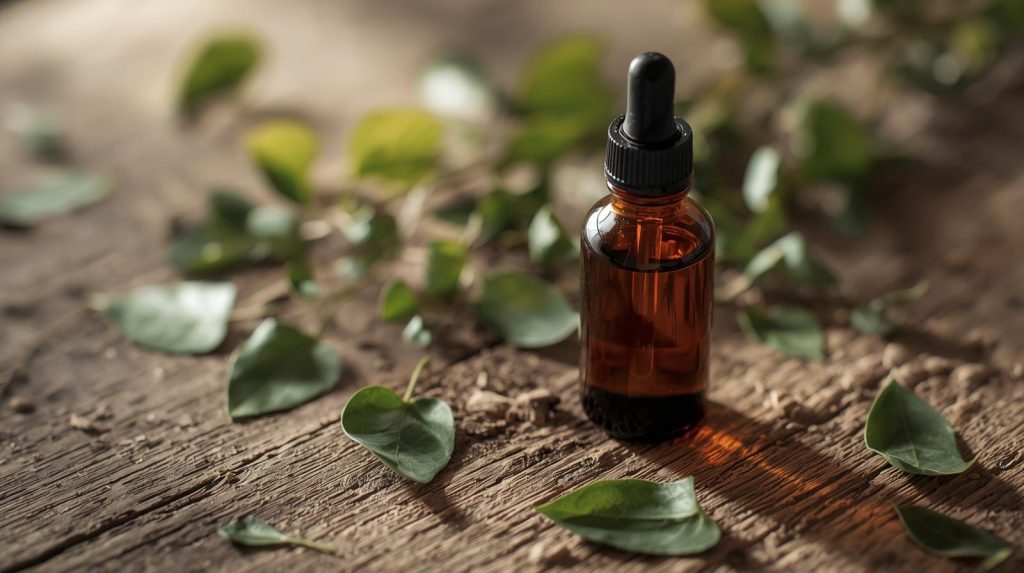
Tea tree oil has been studied for athlete’s foot and fungal nail infections. NCCIH says the evidence for fungal nail infections is too limited to support a conclusion, and it may not work as well as standard treatment for athlete’s foot.
Because it’s widely available and easy to use, it’s often one of the first remedies people reach for.
How to use it:
- Dilute 2–3 drops in a tablespoon of carrier oil before applying to skin
- Do not drip essential oil directly into soak water; oil does not disperse evenly and can contact skin at full strength
- Stop if redness, burning, itching, or a rash develops; never swallow tea tree oil
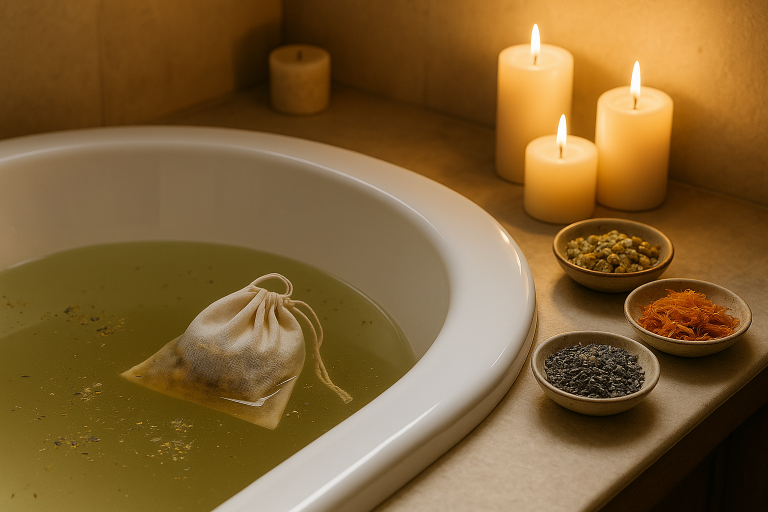
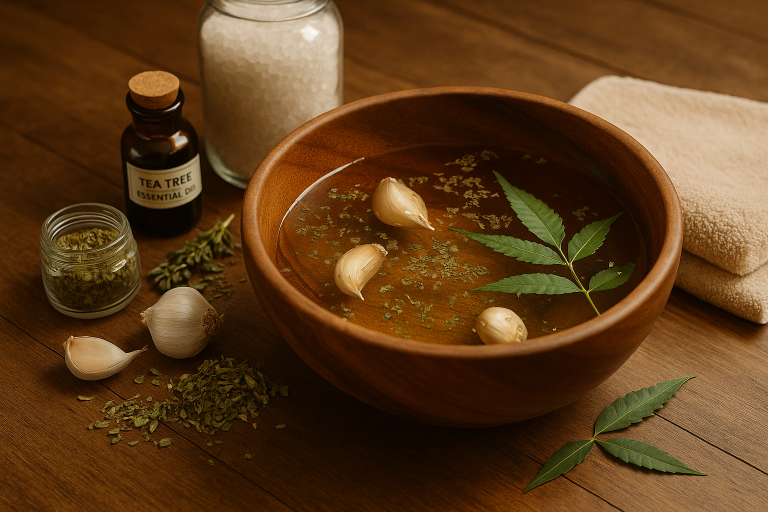
For a simple topical self-care option, try this herbal foot soak for tired feet, nail care, and small rituals.
3. Oregano (Origanum vulgare)
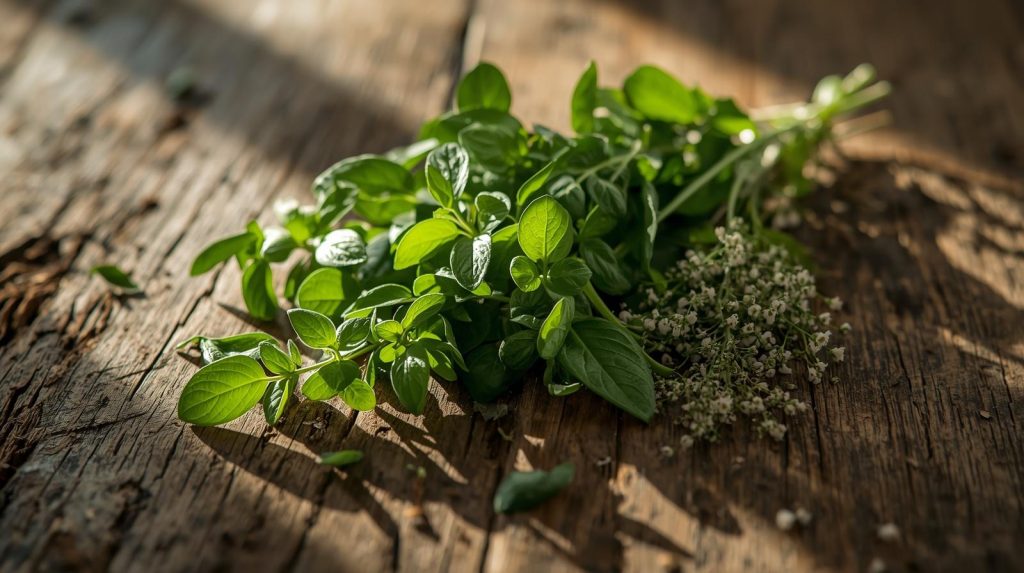
Oregano contains carvacrol and thymol, compounds that show antifungal activity in laboratory studies.
Laboratory findings do not make oregano oil a proven treatment. The essential oil is highly concentrated and can irritate or burn skin.
How to use it:
- Add to soups, sauces, and roasted dishes
- Avoid homemade oregano-oil treatments on broken, inflamed, or sensitive skin
- Do not use concentrated oregano supplements as a substitute for diagnosis or medication
4. Apple Cider Vinegar
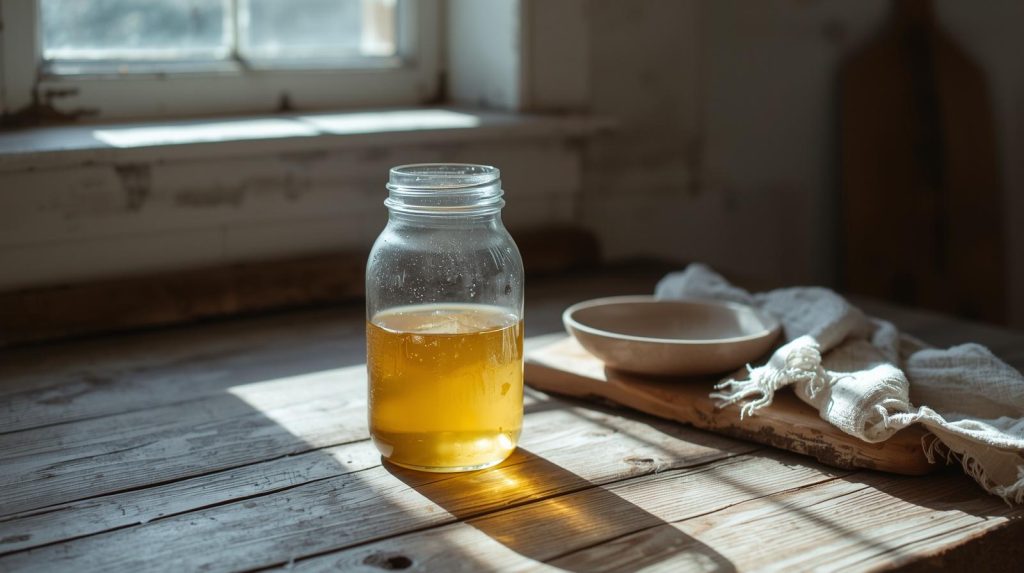
Apple cider vinegar isn’t technically an herb, but it’s a staple in herbal remedies and one of the most accessible antifungal options you can use at home.
Its acidity explains its use in home remedies, but clinical evidence that vinegar treats fungal skin or nail infections is limited.
How to use it:
- Foot soak: 1 part ACV to 2 parts warm water
- Scalp rinse: dilute and use after washing
- Skin application: apply diluted with a cotton pad
This is one of the easiest starting points if you want something simple, affordable, and already in your kitchen.
5. Thyme (Thymus vulgaris)
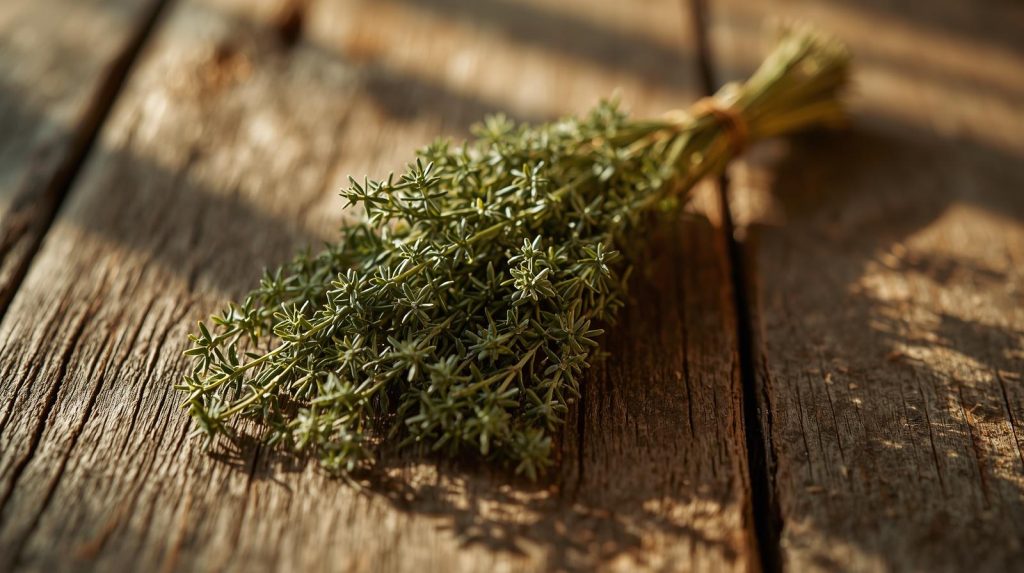
Thyme contains thymol, which shows antimicrobial activity in laboratory research. Drinking thyme tea or cooking with thyme has not been shown to treat a fungal infection.
Unlike harder-to-find herbs, thyme is easy to source and fits naturally into both cooking and herbal preparations.
How to use it:
- Brew as a tea
- Add to everyday meals
- Infuse into oil for skin use
Herbs like thyme and rosemary are often used together in both cooking and herbal preparations—you can explore more in this guide on rosemary benefits and uses.
How to Use Antifungal Herbs in Daily Life
You do not need to turn every promising laboratory ingredient into a treatment routine.
Start simple:
- Add garlic and oregano to meals regularly
- Use tea tree oil for targeted topical support
- Incorporate apple cider vinegar into soaks or rinses
- Drink herbal teas like thyme for gentle internal support
More is not better. Concentrated essential oils, raw garlic, and acidic preparations can damage skin when used carelessly or repeatedly.
If you want something more hands-on, try an Herbal Foot Soak for Nail & Skin Health to combine multiple antifungal ingredients into one routine.
Are Antifungal Herbs Actually Effective?
Many antifungal herbs have been used traditionally for generations, especially in everyday home remedies. Some, like garlic, oregano, and tea tree oil, have also been studied for their antimicrobial properties.
Most evidence is laboratory or preliminary evidence, not proof that an herb treats an infection in people. Hygiene and keeping affected areas dry can help, but persistent infections may need an appropriate antifungal medication.
For a mild skin concern, ask a pharmacist or clinician about an evidence-based over-the-counter option. Nail, scalp, recurrent, spreading, or severe symptoms deserve professional evaluation.
FAQ: Antifungal Herbs
Which herbs show antifungal activity in research?
Garlic, oregano, thyme, and tea tree contain compounds with antifungal activity in laboratory studies. That does not establish a “strongest” herb or prove clinical effectiveness.
Can antifungal herbs replace medication?
They can support the body, but they shouldn’t replace medical treatment for persistent or severe infections.
How long do natural antifungal remedies take to work?
There is no reliable universal timeline because many herbal remedies have not been proven to clear fungal infections. A lack of improvement is a reason to confirm the diagnosis.
Antifungal herbs don’t have to be complicated or hard to find. In most cases, the most effective options are the ones you can use consistently—right from your kitchen or a simple home apothecary.
Start with one or two. Build from there. And focus on what you can realistically maintain.
That’s where the real results come from.