Herbal Foot Soak for Tired Feet, Nail Care & Simple Rituals
Why Use an Herbal Foot Soak?
A foot soak is the small version of a ritual bath: less water, less cleanup, and much easier to manage when you are tired or short on time. Warm water can soften rough skin and thick nails, while dried herbs add scent and make an ordinary care task feel more deliberate.
This recipe is meant for tired-foot care, basic nail grooming, and simple ritual use. It is not a treatment for athlete’s foot, toenail fungus, open wounds, or another infection.
Safety note: Skip foot soaks and ask a healthcare professional for guidance if you have diabetes, poor circulation, reduced feeling in your feet, open sores, spreading redness, drainage, or a suspected infection.
A Practical Herbal Foot Soak
You’ll Need
- A basin or foot bath
- 8–10 cups comfortably warm water
- 1/2 cup Epsom salt, optional
- 1–2 tablespoons dried herbs, such as chamomile, calendula, rosemary, thyme, or lavender
- A reusable tea bag, nut-milk bag, or tied piece of cheesecloth, optional
- A clean towel
Instructions
- Place the dried herbs in a reusable tea bag or tied cloth. This keeps leaves out of foot-spa jets and saves you from picking bits of herbs from between your toes.
- Add the herbs and optional Epsom salt to the basin.
- Pour in comfortably warm—not hot—water. Test it carefully before putting your feet in.
- Soak for about 10–15 minutes.
- Dry your feet completely, especially between the toes. Moisturize dry areas if needed, but avoid leaving heavy moisturizer between the toes.
Use fresh water and clean the basin after each soak. Once or twice a week is plenty for ordinary self-care; soaking more often is not automatically better.
Why These Ingredients Are Here
Warm water does most of the practical work. It softens dry skin and nails before careful grooming and can feel good on tired feet.
Epsom salt is optional. Many people enjoy it in baths and soaks, but it should not be described as pulling out toxins or curing an infection. It can also sting or dry irritated skin.
Dried herbs are mainly included for scent, tradition, and the experience of the soak. Chamomile and lavender make a softer evening blend; rosemary and thyme smell sharper and more kitchen-herbal; calendula gives the water a warm golden color.
What About “Antifungal” Additions?
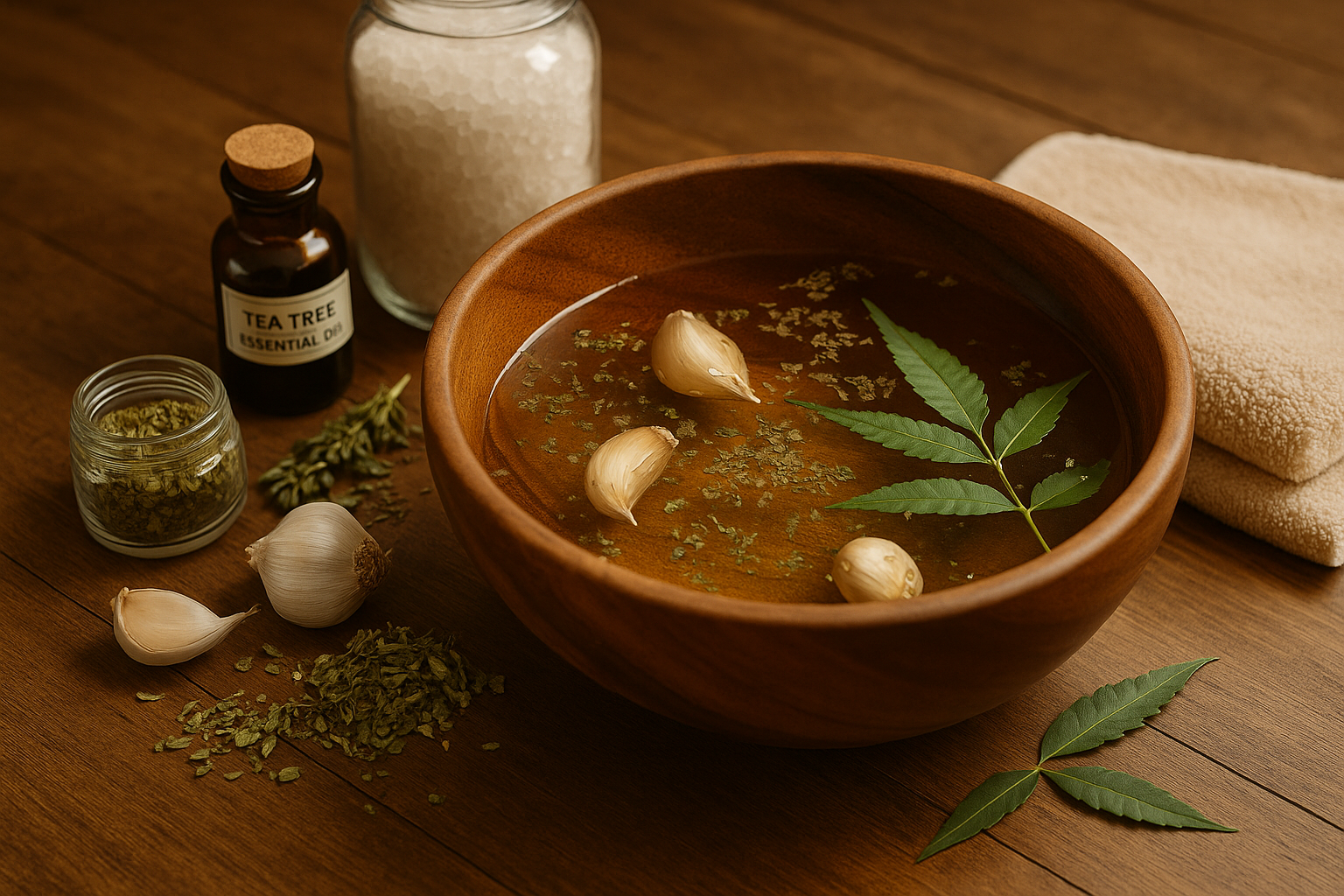
Garlic, vinegar, oregano, thyme, neem, and tea tree oil are often mentioned in home-remedy recipes because they contain compounds that show antifungal activity in laboratory studies. That is not the same as proving that a homemade soak treats a fungal infection in people.
I do not recommend adding crushed garlic or undiluted essential oils to soak water. Raw garlic can burn skin, and essential oils float rather than dispersing evenly in water, which can expose small areas of skin to a concentrated dose. Vinegar can also sting cracked or inflamed skin.
For a closer look at the research, traditional uses, and safety limits, read 5 Antifungal Herbs for Everyday Use.
Turn It Into a Small Ritual
A foot soak works well when a full ritual bath is unrealistic. You can keep it simple:
- Choose herbs by scent or seasonal association.
- Light a candle somewhere safe or put on music.
- Use the soaking time to read, journal, or sit without doing another chore.
- Finish by trimming or moisturizing your feet only if the skin is intact and comfortable.
It does not need to become a complicated ceremony. The point is that ten quiet minutes still count.
When a Foot Soak Is Not Enough
Itching, peeling, persistent nail changes, pain, swelling, drainage, or symptoms that keep returning may need an antifungal product or professional diagnosis. Stop soaking and seek care if the skin becomes more irritated or the problem is worsening.