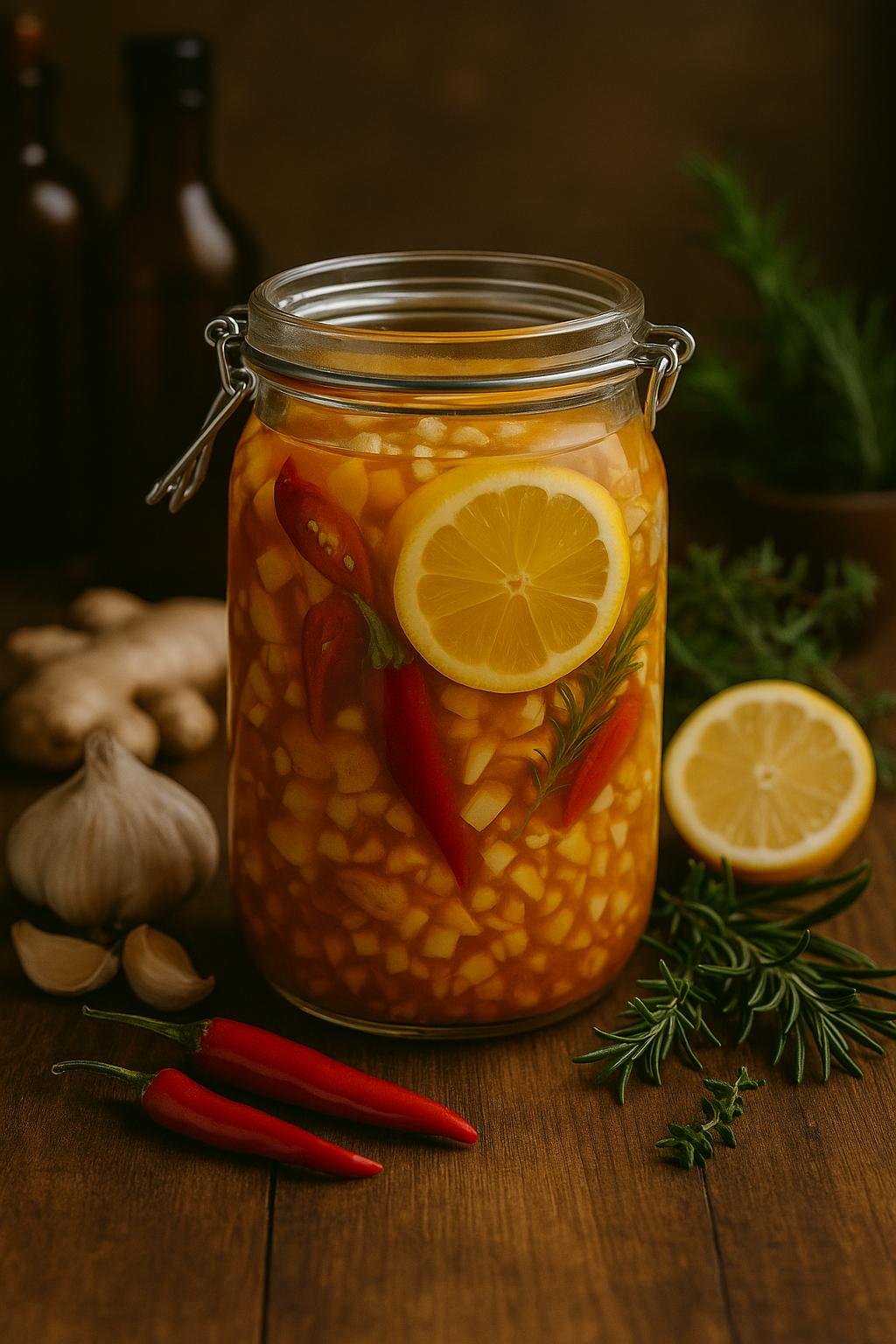
Fire Cider Recipe: A Spicy Herbal Tonic for Immune Support & Winter Wellness
When the weather turns cold and sniffle season starts, many herbalists reach for a time-tested, homemade tonic: fire cider. This zesty, vinegar-based infusion is packed with warming spices, pungent roots, and immune-supportive herbs. The result is a tangy, spicy liquid that can be taken by the spoonful, mixed into drinks, or drizzled over food.
Herbalist Rosemary Gladstar describes fire cider as a spicy herbal vinegar traditionally used as a wintertime tonic.
What is Fire Cider?
Fire cider is a herbal vinegar infusion designed to support immunity, warm the body, and promote circulation during the colder months. It gets its name from the fiery kick of ingredients like horseradish, ginger, hot peppers, and garlic.
The base is usually raw apple cider vinegar (ACV), which is antimicrobial and helps preserve the mixture. The herbs and spices steep for several weeks, releasing their beneficial compounds into the vinegar. Some people sweeten the strained liquid with honey for a smoother flavor and additional antimicrobial benefits.
Benefits of Fire Cider
While fire cider is not a cure-all, many people use it for:
- Immune Support – Garlic has a long history of culinary and medicinal use and is commonly used to support immune function, particularly during cold and flu season. For more seasonal herbal options, see my guide to Top 10 Best Herbal Teas for Cold & Flu Season.
- Circulation & Warming – Ginger and hot peppers bring warming heat, making fire cider especially welcome in cold weather.
- Digestive Support – Vinegar, ginger, and other pungent ingredients are traditionally used to support digestion.
- Nasal & Sinus Comfort – Horseradish’s sharp, pungent character can feel clearing when you’re congested.
Core Ingredients for Fire Cider & Why They’re Used
- Apple Cider Vinegar (ACV) – The acidic base that extracts the ingredients and helps preserve the finished mixture. Raw, unpasteurized ACV may also retain live cultures.
- Horseradish Root – A sharp, warming root traditionally used for sinus and respiratory support.
- Ginger Root – A warming root that supports digestion and adds a spicy bite.
- Garlic – A pungent culinary and medicinal herb traditionally used for immune support.
- Onion – Adds pungency, flavor, and naturally occurring plant compounds.
- Hot Peppers – Capsaicin adds heat and creates a warming sensation.
- Citrus – Adds vitamin C and brightens the flavor.
- Herbs – Thyme, rosemary, or oregano add aromatic flavor and complement the other ingredients.
- Honey (optional) – Softens the acidity, balances the heat, and adds a soothing quality.
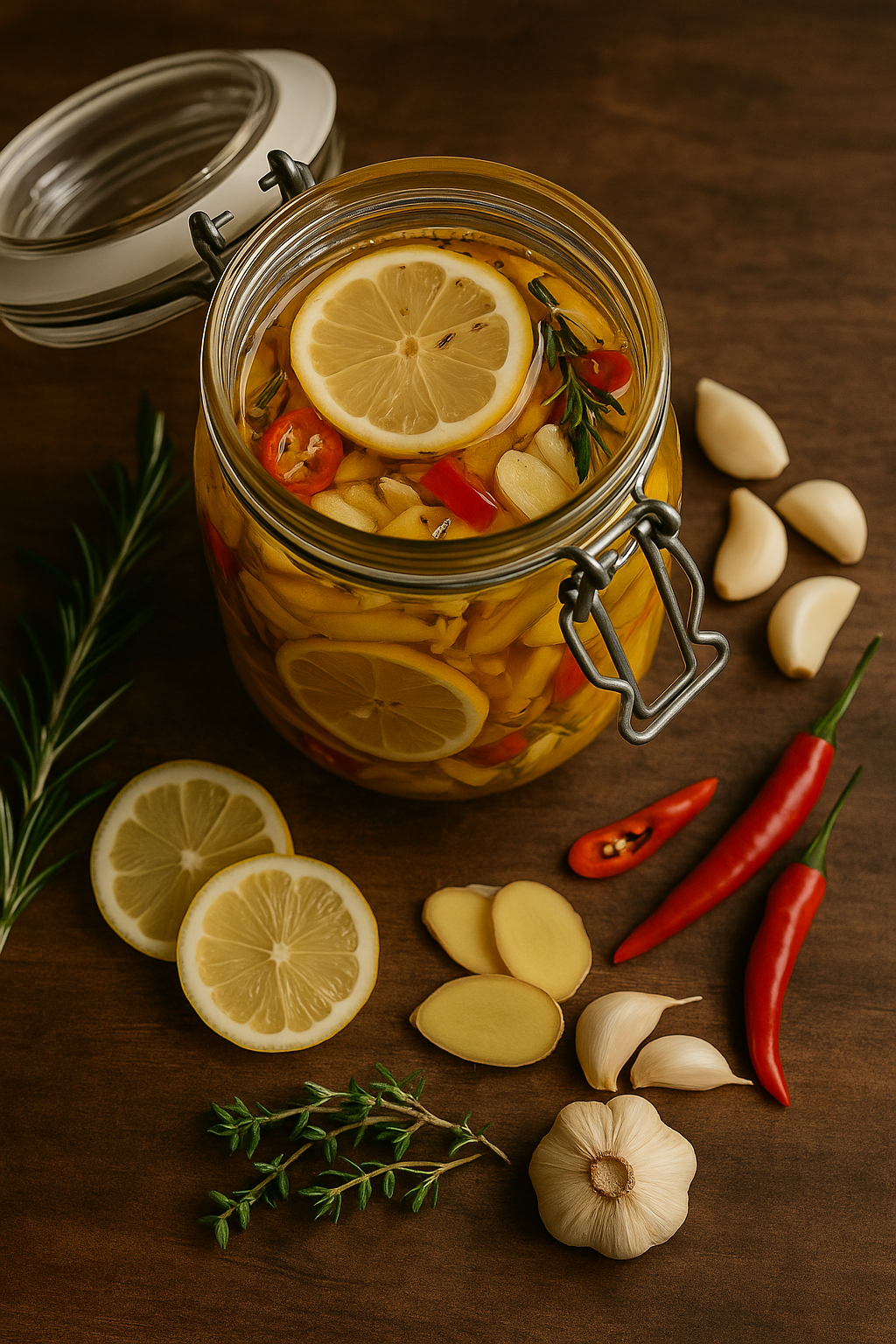
Homemade Fire Cider
Ingredients
Equipment
Method
- Wash and chop all roots, vegetables, and herbs. Grate the horseradish in a well-ventilated area—it can be very pungent.
- Place all ingredients except the honey in a clean quart-sized glass jar.
- Pour in enough apple cider vinegar to completely cover the ingredients. Press everything down with a clean utensil to remove air pockets, making sure no pieces stick above the vinegar.
- Place a piece of parchment paper between the jar and a metal lid to prevent corrosion. Label the jar with the date and contents.
- Store in a cool, dark place for 3–4 weeks. Shake the jar daily.
- Strain the liquid through a fine-mesh strainer or cheesecloth into a clean bottle. Add honey to taste and stir until dissolved.
Notes
Variations to Try
- Citrus-Forward – Add orange slices or grapefruit for a bright, tangy twist.
- Extra Spicy – Use more hot peppers or include cayenne powder.
- Herbal Blend – Add sage, oregano, or basil for additional flavor and properties.
- Berry Infusion – Add dried elderberries for extra immune support and a deeper berry flavor.
How to Use Fire Cider
- Straight by the spoonful – Take 1–2 tablespoons daily as a tonic.
- Diluted in water or tea – For a gentler approach, especially for those sensitive to vinegar.
- Salad dressing base – Mix with olive oil for a spicy vinaigrette.
- Cooking – Splash into soups, stews, or marinades for added depth.
Contraindications and Practical Warnings
- Reflux, ulcers, or a sensitive stomach: Vinegar, hot peppers, horseradish, raw onion, and garlic can cause burning or worsen symptoms. Dilute well, use it with food, or skip it.
- Teeth and throat: Do not sip acidic fire cider slowly throughout the day. Dilute it, avoid holding it in your mouth, and rinse with plain water afterward. Stop if it irritates your mouth or throat.
- Medications and surgery: Regular concentrated amounts of garlic and ginger may be a concern with blood-thinning medicines, bleeding disorders, or upcoming surgery. Ask a clinician or pharmacist if this applies to you.
- Pregnancy and breastfeeding: Food amounts of individual ingredients are not the same as taking a concentrated daily tonic. Check the complete recipe with your prenatal care professional before regular use.
- Children: The heat and acidity may be too harsh. Never give honey to a child under 12 months. Ask a pediatrician before using a concentrated herbal preparation for a child.
- Grapefruit variation: Grapefruit interacts with a number of prescription medicines. Leave it out unless you know it is compatible with your medication.
- Allergies and irritation: Avoid any ingredient that has caused a reaction before. Stop using the mixture for hives, swelling, wheezing, severe stomach pain, or other concerning symptoms.
Storage & Shelf Life
Once strained, transfer the fire cider to a clean, tightly sealed bottle. For the most conservative storage option, refrigerate it and use it within three months, following University of Maine Cooperative Extension’s guidance for homemade herbal vinegars. Traditionally, vinegar-and-honey herbal preparations are also kept in a cool, dark place for several months; Mountain Rose Herbs estimates an approximately six-month shelf life for properly stored oxymels. Because homemade batches vary, discard yours if you notice mold, an off odor, sliminess, or unexpected bubbling, fizzing, or pressure.
Conclusion
Fire cider is a bold, invigorating tonic that combines the best of pungent roots, warming spices, and tangy vinegar. Making it at home means you can adjust the flavor, spice level, and herbs to your preference — and you’ll have a jar ready to support your wellness throughout the colder months.
If you’ve never tried it before, start with a small batch. Experiment with flavors, enjoy the process, and keep this versatile tonic in your seasonal wellness rotation.
If you’re using fire cider as an autumn kitchen project with the family, our Mabon for Kids guide includes it alongside other practical equinox activities.