What Is Shadow Work? A Complete Beginner’s Guide
Shadow work gets talked about a lot in witchcraft, journaling, and wellness spaces. Sometimes it is explained clearly. Other times it gets buried under vague language about healing, transformation, and becoming your “highest self.” That is not especially helpful when you are trying to figure out what the practice actually is.
At its simplest, shadow work means looking at the parts of yourself you usually avoid. That might be fear, jealousy, shame, grief, resentment, anger, insecurity, or a pattern you keep repeating even though you know it is not helping.
For witches and spiritual practitioners, shadow work often shows up through journaling, tarot, ritual, moon work, and quiet reflection. In psychology, the idea is usually connected to Carl Jung’s concept of the shadow: the parts of the personality that are hidden, rejected, or pushed out of conscious awareness.
Shadow work is not therapy. It is not a treatment plan. It is also not a contest to see how much emotional discomfort you can tolerate. Used carefully, it is a reflective practice that can help you notice your patterns before they keep running the show.
This guide covers what shadow work means, how to start without overdoing it, and a few simple ways to use journaling, tarot, and moon phases in your practice.
What Is Shadow Work?
Shadow work is the practice of paying attention to the parts of yourself you usually avoid, deny, or push away.
That might include emotions you were taught were “too much,” like anger or jealousy. It might include old wounds, fear of failure, resentment, insecurity, or patterns you do not like admitting are there. It can also include good things you learned to hide, such as confidence, ambition, creativity, or the desire to be seen.
In Jungian psychology, the shadow is not simply “bad” or evil. It is made up of the parts of the personality that have been rejected, repressed, or kept outside the image we prefer to have of ourselves. The International Association for Analytical Psychology describes the individual shadow as being formed when unacceptable traits are pushed out of the ego and persona.
In witchcraft and spiritual practice, shadow work usually means bringing those hidden patterns into awareness through ritual, journaling, meditation, tarot, or seasonal reflection.
A simple way to think about it: you are not trying to erase the difficult parts of yourself. You are trying to stop pretending they are not there.
Why Shadow Work Is Important
Shadow work can be useful because avoided feelings do not usually disappear. They tend to leak out sideways: in arguments, habits, defensiveness, resentment, procrastination, people-pleasing, or the same relationship pattern showing up again with a different person.
For example, jealousy over someone else’s success may point to fear that you are falling behind. Anger during a small disagreement may have more to do with feeling ignored than with the actual subject of the argument. Avoiding a goal may have less to do with laziness and more to do with not wanting to be seen trying.
Shadow work gives you a way to pause before you act from the first reaction.
For spiritual practitioners, it can also fit into ritual work. The new moon and waning moon are often used for reflection, release, and starting over. Shadow work fits those phases because it is quiet work. There is not much to perform.
Most of it happens with a notebook, a few honest questions, and enough patience to stay with an uncomfortable answer for a minute before explaining it away.
Common Myths About Shadow Work
Myth 1: Shadow Work Is Only for Trauma Survivors
Shadow work can bring up trauma, and that is one reason it needs to be approached carefully. But it is not only for people with major trauma histories.
Everyone has avoided feelings, old patterns, and parts of themselves they would rather not look at. Shadow work can be as simple as noticing why you keep reacting the same way in the same situation.
If trauma, panic, dissociation, or intense distress comes up, that is a sign to stop and seek support from a qualified mental health professional.
Myth 2: Shadow Work Is Dark Magic
Shadow work is not about summoning anything or inviting harm. It is self-reflection. Some witches may add candles, tarot, herbs, or moon timing, but those tools are there to support the practice, not make it dangerous.
The “shadow” language can sound dramatic, but the actual work is usually plain: writing things down, asking better questions, and being honest about patterns you would rather ignore.
Myth 3: Shadow Work Has to Be Intense
It does not.
A five-minute journal session can count. Pulling one tarot card and asking what reaction you need to examine can count. Noticing that you are avoiding a conversation can count.
More intense is not always better. For most people, small and consistent is safer and more useful than trying to dig up every painful thing in one sitting.
The Psychology of Shadow Work
Carl Jung used the word “shadow” for the parts of the personality that the conscious self does not easily recognize or accept. These hidden parts can show up indirectly, especially through projection.
Projection is when something we dislike, fear, or reject in ourselves gets placed onto someone else. This does not mean every irritation is secretly about you. Sometimes people are just being difficult. But strong reactions can be useful information.
For example, if someone else’s confidence irritates you, it may be worth asking whether you have learned to suppress your own confidence. If someone’s neediness bothers you more than expected, it may point toward discomfort with your own needs.
In spiritual practice, this kind of reflection often moves through journaling, tarot, dreams, ritual, or meditation. The point is not to diagnose yourself. The point is to notice what keeps repeating.
How to Begin Shadow Work Safely
Beginning shadow work can feel intimidating, but it does not need to be complicated. Treat it as a step-by-step process.
Before you start, keep this in mind: if a session brings up overwhelming emotions, stop. Ground yourself. Drink water, eat something, step outside, text someone safe, or return to ordinary tasks. Shadow work can complement therapy, but it should not replace professional mental health care.
Step 1: Set Up a Quiet, Grounded Space
You do not need a perfect altar or a full ritual setup. You just need a space where you can focus for a few minutes.
You might:
- Light a candle.
- Make tea.
- Keep a blanket nearby.
- Put your phone on silent.
- Sit by a window, at your kitchen table, or wherever you can write without being interrupted.
If you use herbs or crystals, keep it simple. Lavender, rosemary, amethyst, or obsidian can be part of the setup if they are already part of your practice. They are optional.
The goal is to help your body understand that you are pausing to reflect, not spiraling into an open-ended emotional mess.
Step 2: Choose One Emotion or Pattern
Do not try to unpack your entire life at once.
Choose one thing:
- A reaction that felt bigger than the situation.
- A repeated argument.
- A feeling you avoid.
- A person who triggers a strong response.
- A dream, memory, or pattern that keeps coming back.
Example: “I felt jealous when my coworker was praised. What did that bring up for me?”
That is enough for one session.
Step 3: Ask Gentle, Specific Questions
Shadow work works better when the questions are specific. Vague questions tend to produce vague answers.
Try questions like:
- What am I avoiding right now?
- What feeling am I embarrassed to admit?
- When have I felt this before?
- What part of myself do I hide around other people?
- What need is underneath this reaction?
- What would I say if I knew no one else would read this?
You do not need to answer every question. Pick one or two and stay with them.
Step 4: Journaling
Write honestly. It does not need to sound wise, spiritual, fair, or well-adjusted.
No one is grading this. You do not need beautiful language. You do not need to be generous to everyone in your first draft. Shadow work is about results, not presentation. You are trying to get the honest material onto the page so you can look at it clearly.
Set a timer for five to ten minutes if that helps. Stop when the timer ends, especially if you tend to overdo emotional processing.
Example:
“When I snapped at my partner, I do not think it was really about the dishes. It reminded me of feeling ignored. I hate admitting that because it sounds childish, but that is what came up.”
That kind of plain honesty is more useful than trying to make the entry sound profound.
Step 5: Look for the Pattern
After writing, read back through what you wrote and ask:
- Is there a repeated fear here?
- Is there a boundary I keep ignoring?
- Is there an old belief showing up again?
- Is there something I need to say, change, or accept?
This is where shadow work becomes practical. The point is not just to notice a wound or pattern. The point is to decide what you do with that information.
Maybe you apologize. Maybe you set a boundary. Maybe you stop comparing yourself to someone. Maybe you rest instead of pushing through. Maybe you take the issue to therapy because it is bigger than journaling.
Small actions count.
Step 6: Close and Ground
Do not leave yourself emotionally wide open and then immediately jump into social media, work email, or an argument.
End your session in a simple way:
- Drink tea or water.
- Eat something.
- Touch the floor or step outside.
- Wash your hands.
- Blow out the candle.
- Write one sentence about what you are taking with you.
Example: “I noticed that comparison is bringing up fear, and I do not need to act from that fear today.”
That is enough.
Shadow Work Tarot Spread
Tarot can be useful for shadow work because it gives you something concrete to respond to. The cards do not need to “tell your future” to be helpful. They can act as prompts, mirrors, or symbols that help you look at a situation from a different angle.
You do not need to be an expert reader. Pay attention to the imagery, your first reaction, and the part of the card that makes you uncomfortable.
The Three-Card Spread
Use this simple spread:
- The Mask — What am I showing on the surface?
- The Shadow — What am I avoiding, denying, or suppressing?
- The Integration — What would help me respond more honestly?

How to Use the Spread
First, choose one situation or emotional pattern. Shuffle while asking:
“What shadow pattern needs my attention right now?”
Lay the cards from left to right: Mask, Shadow, Integration.
Write down:
- The card names.
- Your first impression.
- The image or symbol you noticed first.
- Any reaction you had, even if it was resistance.
Then answer one question:
“What does this spread suggest I need to stop avoiding?”
Example Reading
If The Sun appears as the Mask, the Five of Cups appears as the Shadow, and The Star appears as Integration, you might read it as:
- Mask: presenting as cheerful, capable, or fine.
- Shadow: grief, disappointment, or regret that has not been fully acknowledged.
- Integration: allowing hope without pretending the grief is gone.
That does not mean the cards have one fixed answer. It means the spread gives you a place to start.
Optional Five-Card Spread
If you want more detail, use five cards:
- The Mask
- The Shadow
- The Root
- The Integration
- The Support
Do not use the larger spread just because it looks more impressive. Use it when you actually have the time and capacity to sit with the answers.
Shadow Work Journal Prompts
Use one prompt at a time. More prompts do not automatically mean deeper work.
- What qualities in other people irritate me the most, and why?
- What emotion do I avoid admitting I feel?
- What am I afraid people would think if they knew the truth?
- What pattern keeps showing up in my relationships?
- What part of myself do I find hardest to accept?
- Where do I feel resentment, and what need might be underneath it?
- What do I criticize in others that I secretly fear in myself?
- What old belief am I still acting from?
- What do I want that I keep pretending I do not want?
- What would change if I stopped trying to seem fine?
If one prompt brings up enough material, stop there.
Tips for Safe Shadow Work
Shadow work is often useful, but it can also bring up difficult material. Keep the practice manageable.
- Start with short sessions.
- Work with one issue at a time.
- Stop if you feel overwhelmed.
- Ground after each session.
- Do not use shadow work to punish yourself.
- Seek professional support for trauma, panic, dissociation, or intense distress.
- Avoid doing deep shadow work right before bed if it leaves you activated.
The goal is not to break yourself open. The goal is to notice what needs your attention and respond more deliberately.
Consistency
Shadow work does not have to be a regularly scheduled event to be effective. It is usually more useful when it becomes part of ordinary life.
You might try:
- A five-minute journal check-in once a week.
- One tarot card when you notice a strong reaction.
- A new moon reflection once a month.
- A waning moon release practice when you are trying to let go of a habit.
- A deeper Samhain reflection once a year.
The key is not frequency. It is honesty.
If you only do shadow work when you have a perfect quiet evening, you may never do it. A few imperfect minutes at the kitchen table can be enough.
Common Challenges in Shadow Work
Resistance
Resistance is normal. Most people do not enjoy looking directly at the parts of themselves they avoid.
Start smaller. Instead of asking, “What is wrong with me?” ask, “What reaction do I want to understand better?”
Fear
Shadow work can feel scary because it asks you to stop hiding from yourself. Keep the container simple and clear: one prompt, one timer, one grounding practice afterward.
If fear becomes panic or distress, stop and get support.
Overwhelm
If you keep spiraling, shorten the session. Ten minutes is enough. You can also choose less intense prompts until you build trust with the practice.
Perfectionism
There is no perfect shadow work entry. You do not need to end with a breakthrough. Some sessions will be boring, messy, repetitive, or unclear.
That is still information.
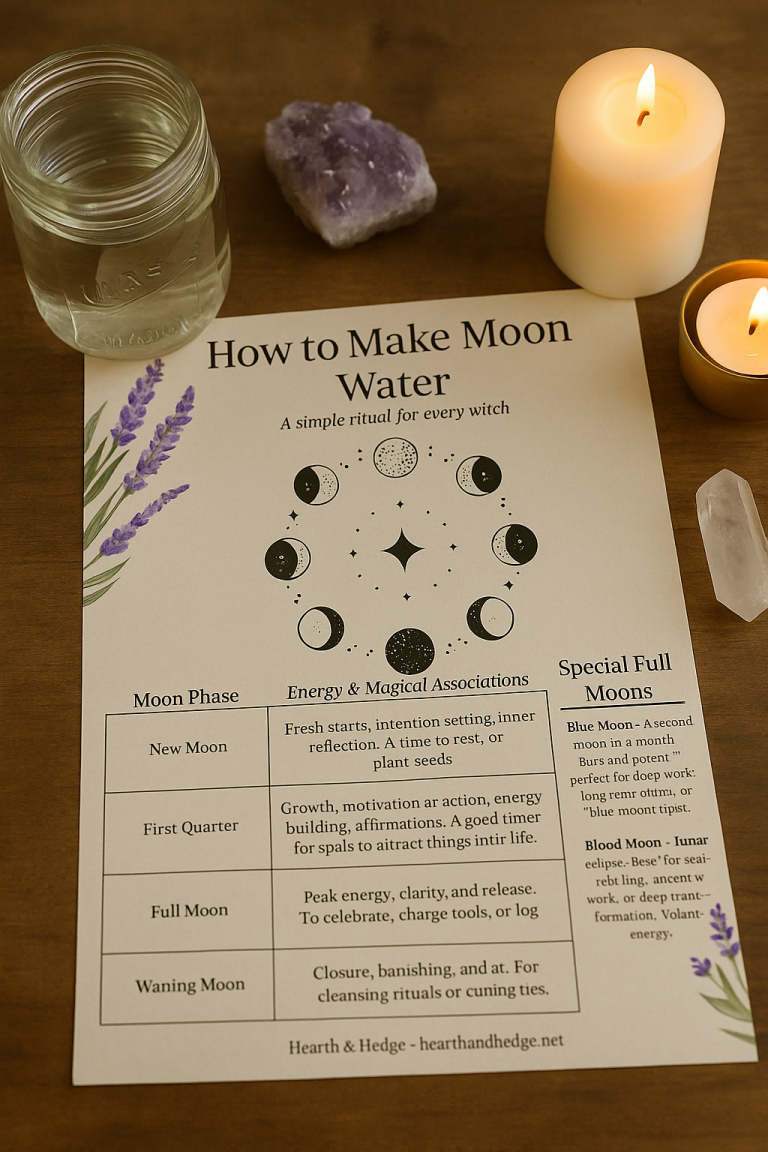
Shadow Work and the Moon Phases
The moon phases can give shadow work a simple rhythm. You do not have to follow them perfectly, but they can help you decide what kind of reflection fits the moment.
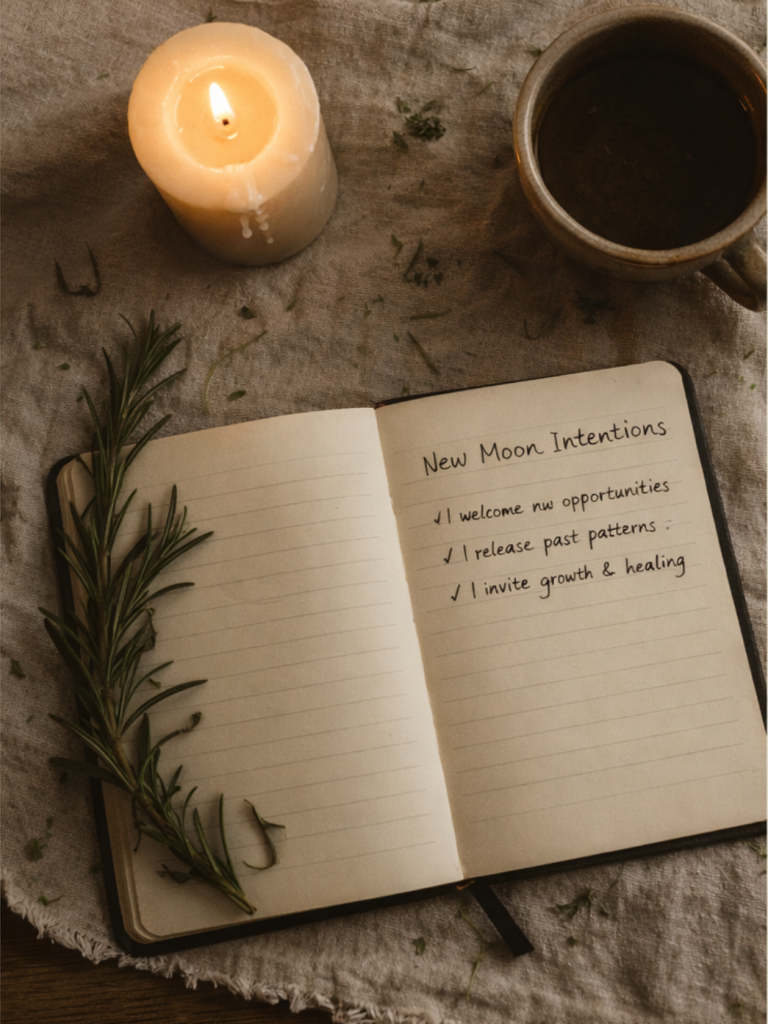
New Moon
Use the new moon for quiet reflection and new intentions.
Ask: “What am I ready to notice?”
Waxing Moon
Use the waxing moon for growth and practice.
Ask: “What new response do I want to build?”
Full Moon
Use the full moon for clarity and illumination.
Ask: “What has become too obvious to keep ignoring?”
Waning Moon
Use the waning moon for release and closure.
Ask: “What am I ready to loosen my grip on?”
You do not need to wait for the right moon phase to do shadow work. If something needs attention, work with it when you have the time and capacity. The moon phases are a guide, not a rulebook.
Is shadow work safe?
Shadow work can be safe when approached slowly and realistically. Start with short sessions, ground afterward, and stop if you feel overwhelmed. If the practice brings up trauma, panic, dissociation, or intense distress, work with a qualified mental health professional.
How often should I do shadow work?
Once a week is enough for many beginners. You can also work with the moon phases, especially the new moon or waning moon. Avoid forcing daily shadow work if it leaves you drained or stuck in overthinking.
Do I need to be a witch to practice shadow work?
No. Shadow work can be done through ordinary journaling and self-reflection. Witches may add tarot, ritual, herbs, candles, or lunar timing, but those tools are optional.
Can shadow work replace therapy?
No. Shadow work can complement therapy, but it is not a replacement for mental health care. If you are dealing with trauma, self-harm thoughts, panic, or severe emotional distress, seek professional support.
What to Take Away From This Practice
Shadow work is not about becoming a perfectly healed, endlessly self-aware person. That is not how people work.
It is about noticing what you usually avoid, being honest about the patterns that keep repeating, and choosing a better response where you can.
Sometimes that looks like a tarot spread under the new moon. Sometimes it looks like five blunt sentences in a notebook before bed. Sometimes it looks like realizing a subject is bigger than journaling and bringing it to therapy.
That still counts.
The hidden parts of yourself do not need to run the whole show. But they do need to be acknowledged if you want to stop reacting from them blindly.