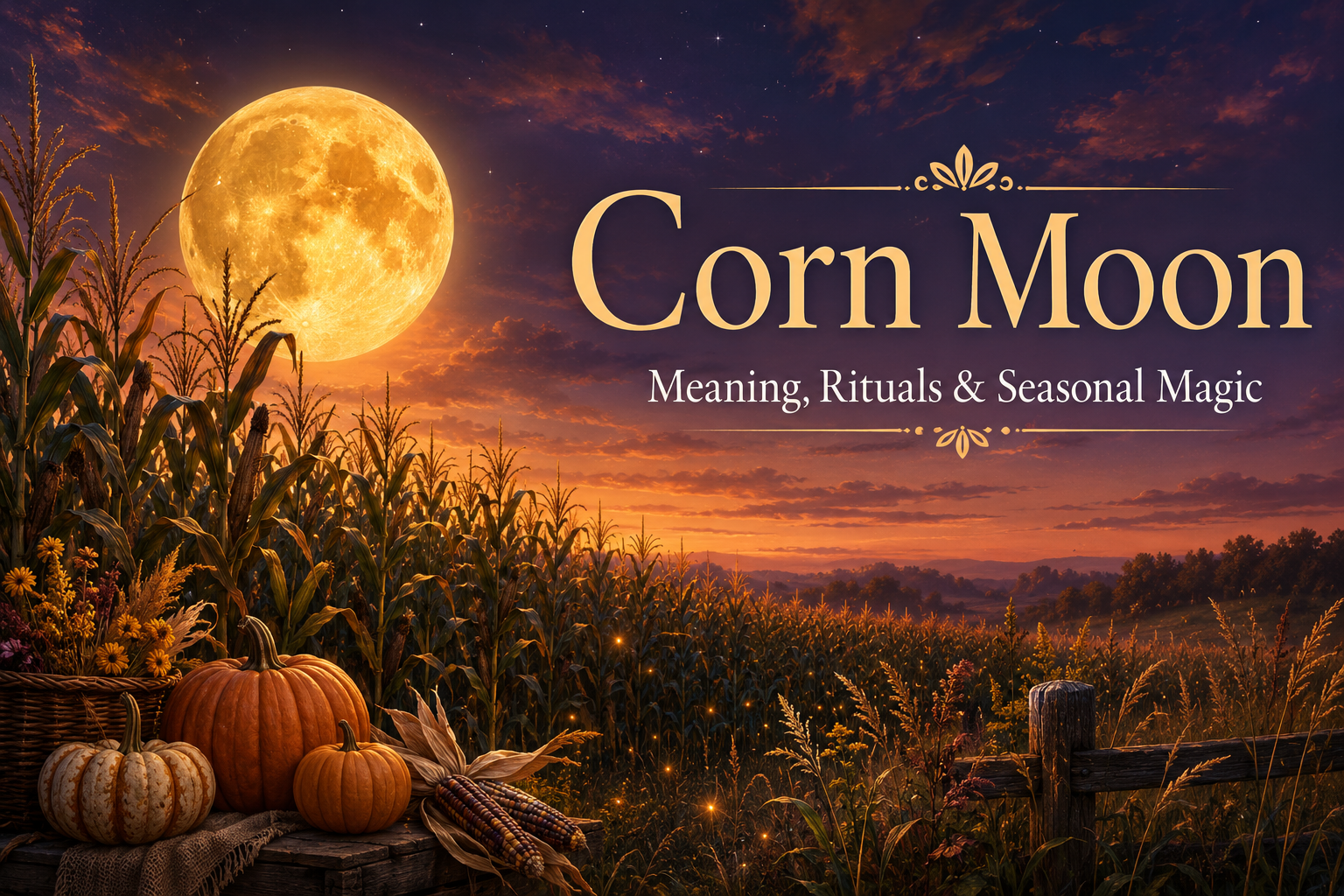
Corn Moon Meaning, Rituals & Seasonal Magic
As summer wanes and autumn begins to stir, the Corn Moon marks the late-summer harvest season. Often overshadowed by the more famous Harvest Moon, it carries its own themes of abundance, nourishment, gratitude, and preparing for fall.
In the naming system used throughout this guide, the 2026 Corn Moon reaches full illumination on September 26 at 12:49 p.m. Eastern Time. Because it is the full moon closest to the autumn equinox, it is also the Harvest Moon this year.
Side note: The August 28 full moon is more commonly called the Sturgeon Moon, though Corn Moon, Green Corn Moon, and Grain Moon also appear as traditional August full-moon names.
For future years and location-specific times, check Timeanddate’s Corn Moon and Harvest Moon guide.
What Is the Corn Moon?
The Corn Moon is a traditional name connected with the late-summer and early-autumn harvest. In many modern full-moon lists it is used for the September full moon, although some sources also use Corn Moon or Green Corn Moon as an August name.
Full-moon names are not one universal system. Popular lists draw from several Indigenous North American, colonial American, European, and later Pagan traditions, so the exact names and months can vary by source.
Is the Corn Moon Always in September?
Usually, in the naming system used here. But unlike the Harvest Moon, Corn Moon is a traditional seasonal name rather than an astronomical designation, so different calendars may apply it differently.
The Harvest Moon has a simpler rule: it is the full moon closest to the autumn equinox. In 2026, that makes the September 26 full moon both the Corn Moon and the Harvest Moon.
If you’re celebrating the equinox with children, our Mabon for Kids guide has simple family activities that fit this same harvest-season window.
Corn Moon Meaning & Spiritual Significance
The Corn Moon arrives as fields ripen and harvest season begins. In modern spiritual practice, it is often associated with gratitude, nourishment, abundance, and preparation for change. Just as a harvest gathers what has grown, this full moon can be used as a point to notice what has actually been sustaining you.
Common Corn Moon themes include:
- Abundance: Recognizing the physical and spiritual “crops” you’ve grown this year.
- Nourishment: Tending to body, mind, and spirit as you move toward fall.
- Transition: Shifting from summer’s outward energy toward autumn’s slower rhythm.
- Community: Corn, grain, and harvest foods naturally connect this moon with shared nourishment and caring for the people around you.
Where the Harvest Moon emphasizes the timing of the harvest itself, the Corn Moon works well as a reminder to notice, gather, and appreciate what sustains you.
The August 2026 Corn Moon Name and Partial Lunar Eclipse
The full moon on Friday, August 28, 2026 is most commonly called the Sturgeon Moon, but Corn Moon and Grain Moon are also used for August in some naming traditions. That makes it worth mentioning here, especially because this full moon coincides with a deep partial lunar eclipse on August 27–28.
At maximum eclipse, NASA says 96.3% of the Moon’s disk will be inside Earth’s umbra. In Eastern Time, the partial phase begins at about 10:33 p.m. on August 27, reaches maximum at 12:12 a.m. on August 28, and ends at about 1:52 a.m. The eclipse is visible across much of the Americas as well as parts of western Europe and western Africa. Check NASA’s August 2026 eclipse guide or Timeanddate’s visibility map for location-specific timing.
Spiritually, eclipse practices vary. Some practitioners skip moon water or charging work during eclipses, while others use the disruption symbolically for release, shadow work, or major transitions. Neither approach is a requirement. Our partial lunar eclipse guide covers the symbolism, simple rituals, and eclipse moon water in more detail. If you’re looking for a total lunar eclipse instead, see the Blood Moon meaning and rituals guide.
The previous September Corn Moon, on September 7, 2025, coincided with a total lunar eclipse. That was a separate event from the 2026 partial eclipse.
Corn Moon Rituals
Popular Corn Moon rituals include gratitude practices, moon water, ritual baths, seasonal offerings, and ancestral connection.
Here are some ways to honor the Corn Moon in your spiritual practice:
1. Gratitude Harvest Ritual
Purpose: To honor abundance and give thanks.
- Gather a basket of seasonal produce (apples, squash, corn).
- Under the moonlight, hold each item and name something you are grateful for.
- Cook a meal with the items as a form of offering and celebration.
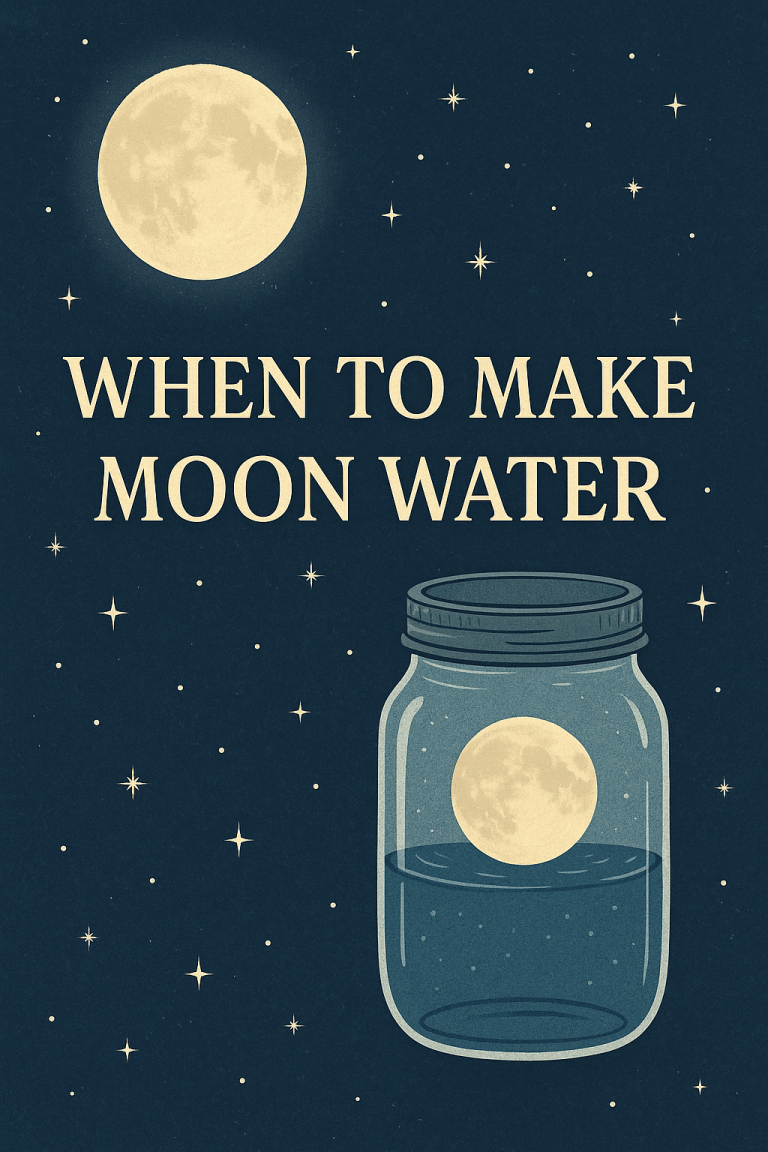
2. Corn Moon Water
Purpose: To create moon water associated with nourishment and abundance.
- Place a clean, closed jar of water outside under the Corn Moon.
- Label it with the date and intended ritual use.
- Use it later in ritual work where you want to focus on gratitude, nourishment, or abundance.
3. Nourishment Ritual Bath
Purpose: To restore and ground your energy.
Add to warm water:
- A handful of oats (for soothing)
- A few drops of clean Corn Moon water intended for external use
- Chamomile or calendula flowers
Use a clean sock or nut milk bag to contain your solids. As you soak, visualize yourself being nourished and replenished.
Find other ritual bath recipes here.
4. Seasonal Offering to the Land
Purpose: To give thanks for the harvest and the land that supports it.
- Place corn, grain, bread, or another seasonal food on your altar during the ritual.
- Say: “As I have been nourished, so I give thanks in return.”
- Compost it or dispose of it safely afterward rather than leaving food where wildlife can reach it.
5. Community Meal or Gathering
Purpose: To celebrate abundance with others.
- Host a potluck where each person brings a seasonal dish.
- Begin with a moment of gratitude for the Corn Moon.
- Share stories, blessings, or intentions for the coming season.
6. Release & Transition Ritual
Purpose: To prepare for autumn’s slower rhythm.
- Write down habits, distractions, or fears you’re ready to release.
- Place the paper under a cob of corn or kernel in a small bowl.
- Under the moonlight, safely burn, tear up, or compost the paper as a symbolic act of letting go.
7. Ancestral Connection
Purpose: To honor the people and traditions that helped sustain your family or community.
- Place corn, bread, fruit, or another meaningful food on your altar alongside photos or symbols of ancestors.
- Light a candle and give thanks for the food, knowledge, stories, or resilience passed down to you.
The Corn Moon vs. the Harvest Moon
The two names overlap, but they describe different things:
- Corn Moon: A traditional seasonal full-moon name, commonly used for September but also applied to August in some naming traditions.
- Harvest Moon: The full moon closest to the autumn equinox, so it can fall in September or October.
In 2026, the September 26 full moon is both the Corn Moon and the Harvest Moon. In 2025, the September Corn Moon and October Harvest Moon fell separately.
What does the Corn Moon mean spiritually?
It is commonly associated with gratitude, nourishment, abundance, and preparing for the shift into autumn.
What rituals are good for the Corn Moon?
Simple gratitude practices, harvest altars, moon water, seasonal meals, offerings, and reflection rituals all fit the Corn Moon’s harvest themes.
When is the Corn Moon in 2026?
In the September naming system used in this guide, the Corn Moon occurs September 26, 2026, reaching full illumination at 12:49 p.m. Eastern Time. It is also the 2026 Harvest Moon.
Is the Corn Moon the same as the Harvest Moon?
Not always. Corn Moon is a traditional seasonal name, while Harvest Moon is the full moon closest to the autumn equinox. In 2026, both names apply to the September 26 full moon.
Final Thoughts
The Corn Moon carries practical themes of abundance, nourishment, gratitude, and transition. You do not need an elaborate ritual to work with it; a seasonal meal, a jar of moon water, a few minutes outside, or simply noticing what has sustained you this year is enough.
The 2026 September Corn Moon falls on September 26 and is also this year’s Harvest Moon.