Herbal Syrup 101: Elderberry & Beyond
An herbal syrup is a concentrated herbal tea sweetened with honey or sugar. The sweetener improves the taste and can help preserve it, which is why syrups are commonly used for strong-tasting herbs and seasonal recipes.
This guide starts with elderberry, then uses the same basic method with other herbs. It covers preparation, storage, and several recipes so you can understand the process instead of memorizing one formula.
You do not need a stocked apothecary to begin. One correctly identified herb, clean equipment, and a sensible storage plan are enough.
What Is an Herbal Syrup?
At its most basic, an herbal syrup is an herbal infusion or decoction (tea made from herbs simmered in water) that has been sweetened with sugar, honey, or another natural sweetener. The sugar not only makes it taste delicious but also acts as a preservative, allowing the syrup to be stored longer than tea alone.
Herbal syrups have been used for centuries in folk medicine traditions around the world. They’re especially popular for supporting the respiratory system, calming coughs, easing digestion, and boosting immunity.
Why Elderberry Syrup Is So Popular
Elderberry (Sambucus nigra) has been used for centuries to support the immune system, especially during cold and flu season. Research suggests elderberries contain antioxidants and may help reduce the duration of respiratory infections when taken at the first sign of illness.
Elderberry syrup benefits include:
- Supporting immune function
- Soothing sore throats
- Providing antioxidants and vitamins
- Offering a safe, kid-friendly way to take herbs
No wonder it’s one of the most popular remedies in modern herbalism. But elderberry is just the beginning—you can make syrups with many other herbs depending on your needs.
Herbal Syrup Basics: Step by Step
Before diving into specific recipes, let’s look at the general method for making any herbal syrup.
Ingredients:
- 1 cup dried herbs (or 2 cups fresh)
- 4 cups water
- 1–2 cups honey (or sugar, maple syrup, etc.)
Instructions:
- Simmer the Herbs – Place your herbs and water in a saucepan. Bring to a boil, then reduce to a simmer. Cook until the liquid is reduced by half (about 30–45 minutes).
- Strain the Liquid – Pour through a fine mesh strainer or cheesecloth to remove plant material.
- Sweeten – While the liquid is still warm, add your sweetener of choice and stir until dissolved. Honey is a favorite because it adds antimicrobial properties.
- Bottle & Store – Pour the syrup into sterilized glass bottles or jars. Label with the name and date. Store in the fridge for up to 2–3 months.
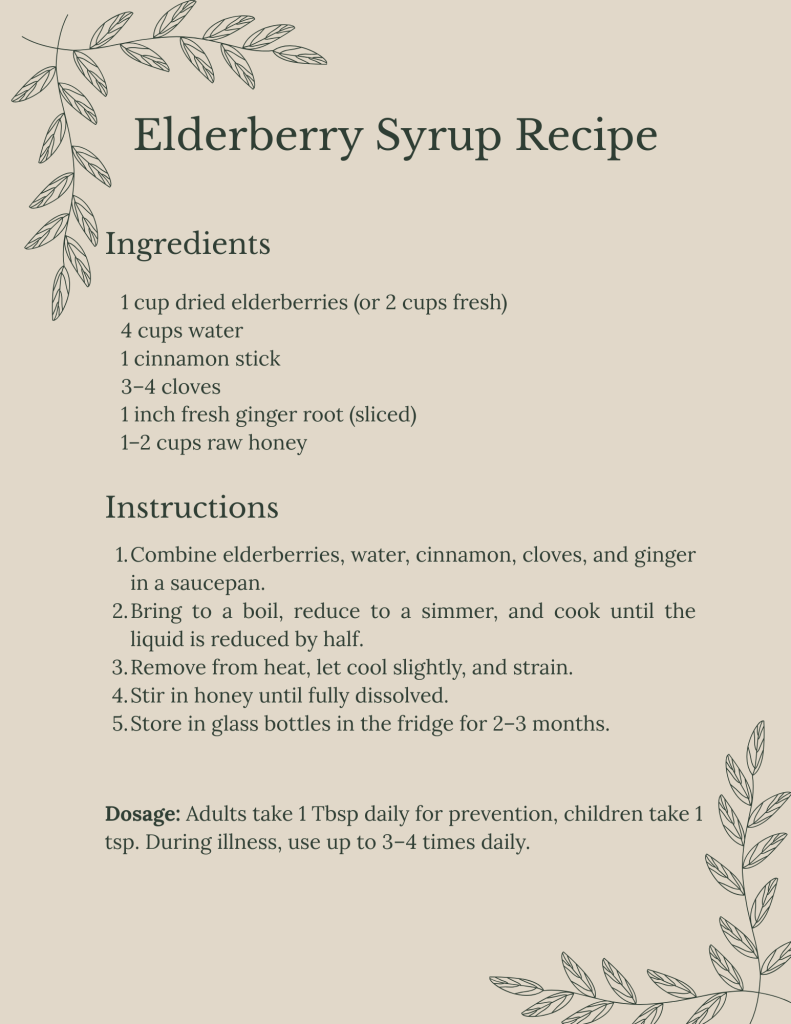
Elderberry Syrup Recipe (Classic)
Ingredients:
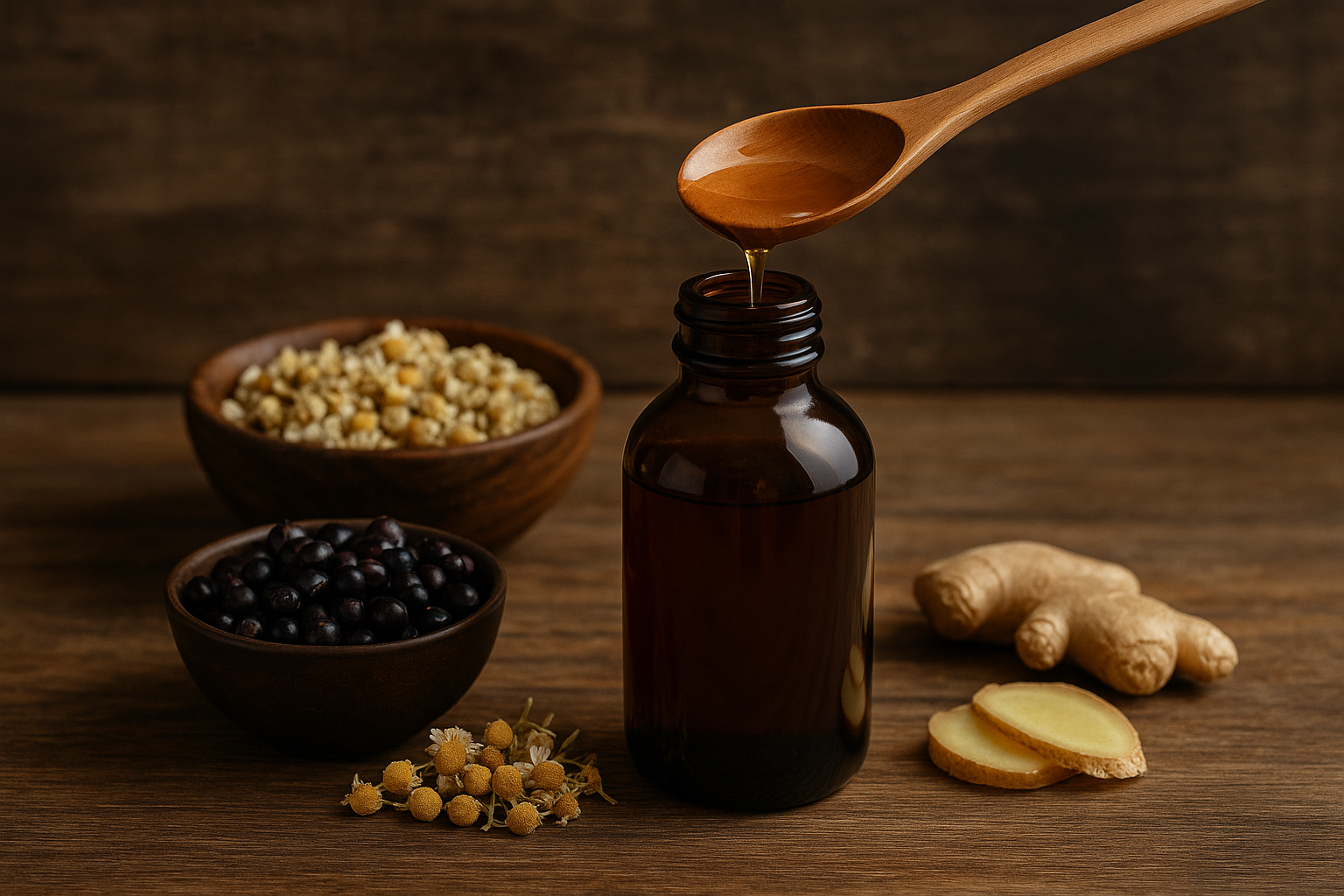
- 1 cup dried elderberries (or 2 cups fresh)
- 4 cups water
- 1 cinnamon stick
- 3–4 cloves
- 1 inch fresh ginger root (sliced)
- 1–2 cups raw honey
Instructions:
- Combine elderberries, water, cinnamon, cloves, and ginger in a saucepan.
- Bring to a boil, reduce to a simmer, and cook until the liquid is reduced by half.
- Remove from heat, let cool slightly, and strain.
- Stir in honey until fully dissolved.
- Store in glass bottles in the fridge for 2–3 months.
Dosage: Adults take 1 Tbsp daily for prevention, children take 1 tsp. During illness, use up to 3–4 times daily.
Beyond Elderberry: Other Herbal Syrups to Try
While elderberry gets all the attention, there are countless herbs you can turn into syrups. Each one has unique benefits and flavors.
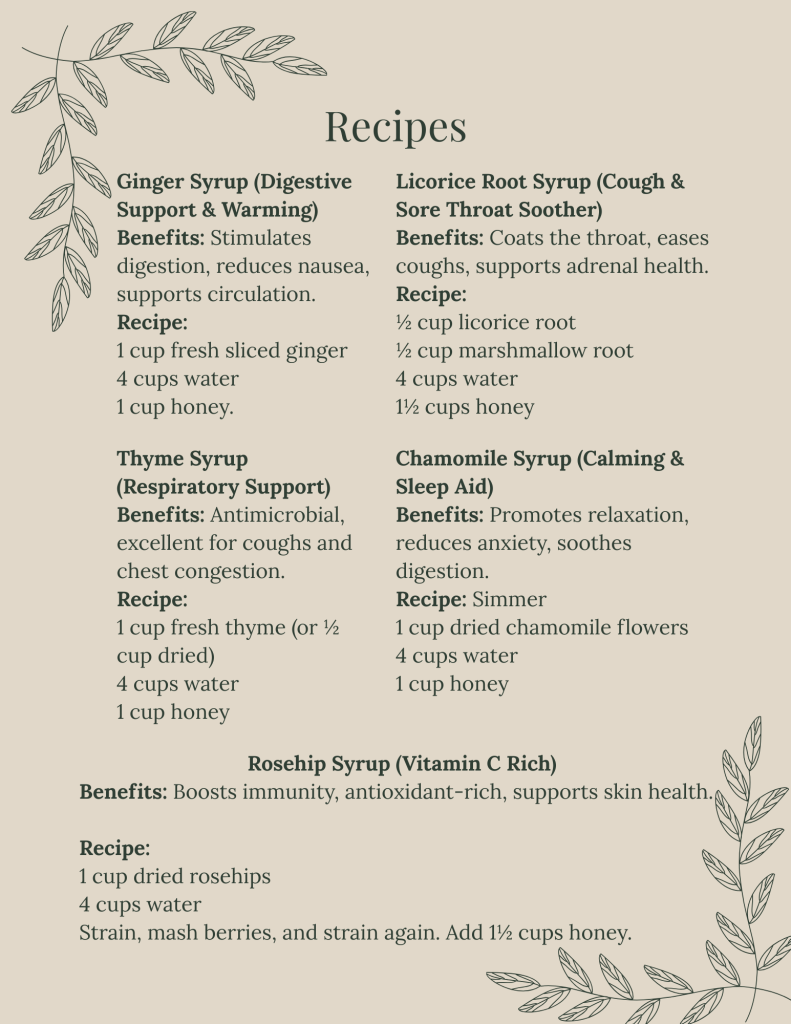
1. Ginger Syrup (Digestive Support & Warming)
- Benefits: Stimulates digestion, reduces nausea, supports circulation.
- Recipe: Simmer 1 cup fresh sliced ginger in 4 cups water for 30 minutes. Strain and add 1 cup honey.
2. Licorice Root Syrup (Cough & Sore Throat Soother)
- Benefits: Coats the throat, eases coughs, supports adrenal health.
- Recipe: Simmer ½ cup licorice root and ½ cup marshmallow root in 4 cups water. Strain and add 1½ cups honey.
3. Chamomile Syrup (Calming & Sleep Aid)
- Benefits: Promotes relaxation, reduces anxiety, soothes digestion.
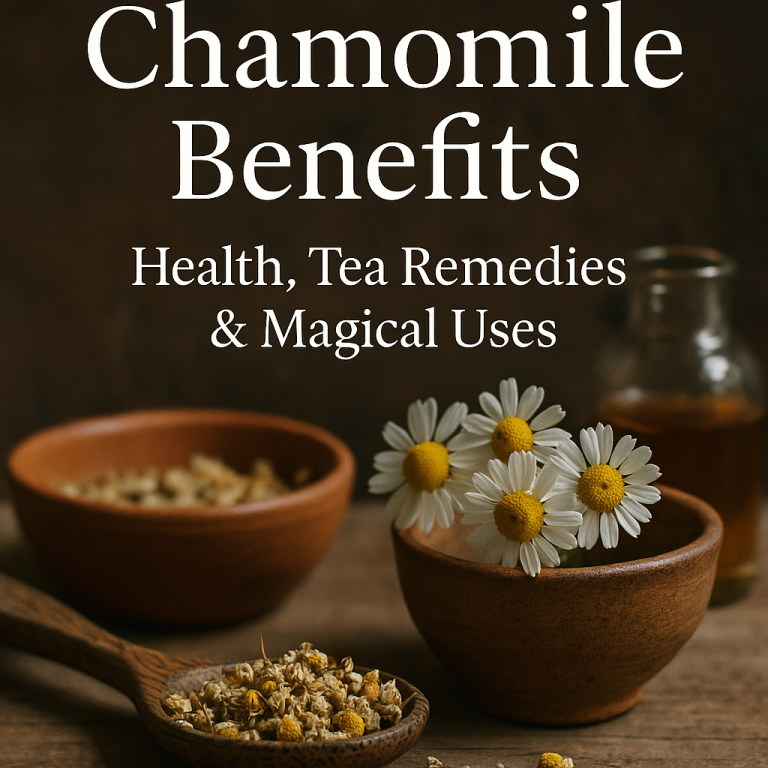
- Recipe: Simmer 1 cup dried chamomile flowers in 4 cups water for 20 minutes. Strain, then mix with 1 cup honey.
Herb Spotlight: Chamomile Benefits
4. Rosehip Syrup (Vitamin C Rich)
- Benefits: Boosts immunity, antioxidant-rich, supports skin health.
- Recipe: Simmer 1 cup dried rosehips in 4 cups water. Strain, mash berries, and strain again. Add 1½ cups honey.
5. Thyme Syrup (Respiratory Support)
- Benefits: Antimicrobial, excellent for coughs and chest congestion.
- Recipe: Simmer 1 cup fresh thyme (or ½ cup dried) in 4 cups water. Strain, add 1 cup honey.
Tips for Success with Herbal Syrups
- Use raw honey when possible for added antimicrobial and immune-supporting benefits.
- Sterilize your jars to extend shelf life.
- Label everything with herb name and date.
- Experiment with blends (elderberry + echinacea, ginger + cinnamon, etc.).
Storing Herbal Syrups
- Refrigeration: Most herbal syrups last 2–3 months in the fridge.
- Shelf Stability: If you want longer storage, increase the sugar/honey ratio or add a splash of brandy as a preservative.
- Freezing: You can freeze syrups in ice cube trays and thaw small amounts as needed.
How to Use Herbal Syrups
- By the spoonful as a daily tonic.
- In tea as a sweetener.
- Over pancakes or oatmeal for a tasty wellness boost.
- In cocktails or mocktails for herbal flavor.
Safety Considerations
- Avoid giving honey to children under 1 year old.
- Double-check contraindications (licorice root and high blood pressure, for example).
- Start with small doses if you’re trying a new herb.
Magical & Folk Uses of Syrups
Herbal syrups aren’t just medicine—they’ve also played a role in ritual and folk magic. Sweet syrups have been used as offerings, love charms, and abundance rituals. Elderberry in particular has long been associated with protection and warding against negativity.
Check out additional Herb Correspondences here.
Recipe Printable
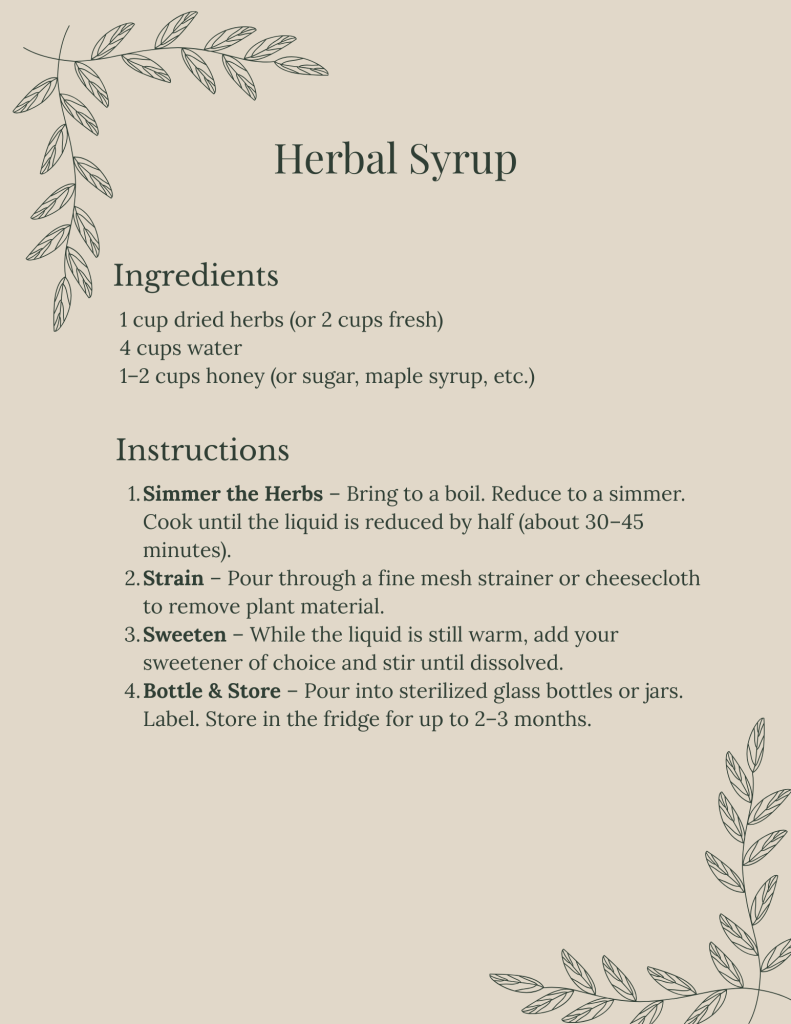
Download the 3 page PDF Herbal 101 Guide, including the basic recipe, elderberry syrup recipe, and 5 bonus recipes.
Conclusion
Herbal syrups make plant medicine approachable, delicious, and practical. While elderberry syrup may be the most famous, there’s a whole world of herbs you can turn into syrups for immunity, digestion, sleep, and more.
By mastering the simple syrup-making process, you can stock your home apothecary with remedies that are both effective and enjoyable.
So next time you brew a pot of tea or reach for cough medicine, consider making your own herbal syrup instead—it might just become a cozy ritual and a wellness staple in your home.