Partial Lunar Eclipse Meaning: Spiritual Significance, Rituals & Moon Water
A partial lunar eclipse happens when only part of the full Moon passes into Earth’s dark shadow. Instead of the entire Moon moving through shadow like it does during a total lunar eclipse, you’ll see a dark section slowly move across part of the Moon.
Astronomically, it’s a near-perfect alignment of the Sun, Earth, and Moon. Spiritually, the meaning depends a lot more on who you ask.
Some witches and spiritual practitioners treat eclipses as powerful times for transformation, release, and shadow work. Others avoid magical work during eclipses because they view eclipse energy as unpredictable or disruptive.
There doesn’t need to be one universal rule. A partial lunar eclipse can simply be a good time to pay attention, reflect on what is changing, and decide whether the symbolism fits anything happening in your own life.
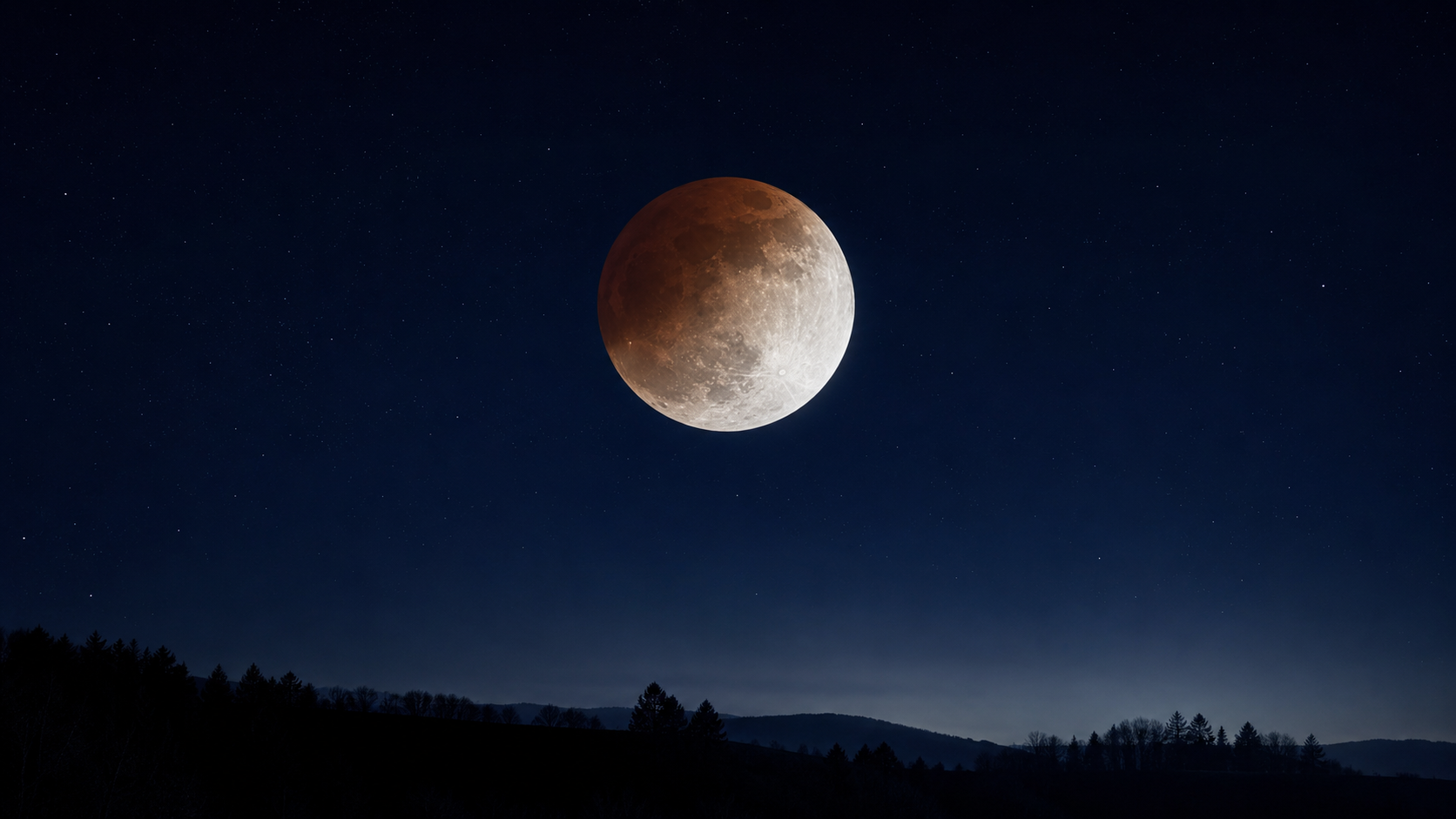
The deep partial lunar eclipse of August 27–28, 2026
This event put 96.3% of the Moon’s disk inside Earth’s umbra at maximum, according to NASA. That is why much of the eclipsed Moon could look coppery or red even though the event was not technically a Blood Moon. See NASA’s August 2026 eclipse guide or Timeanddate’s eclipse page for the event record and visibility details.
What Is a Partial Lunar Eclipse?
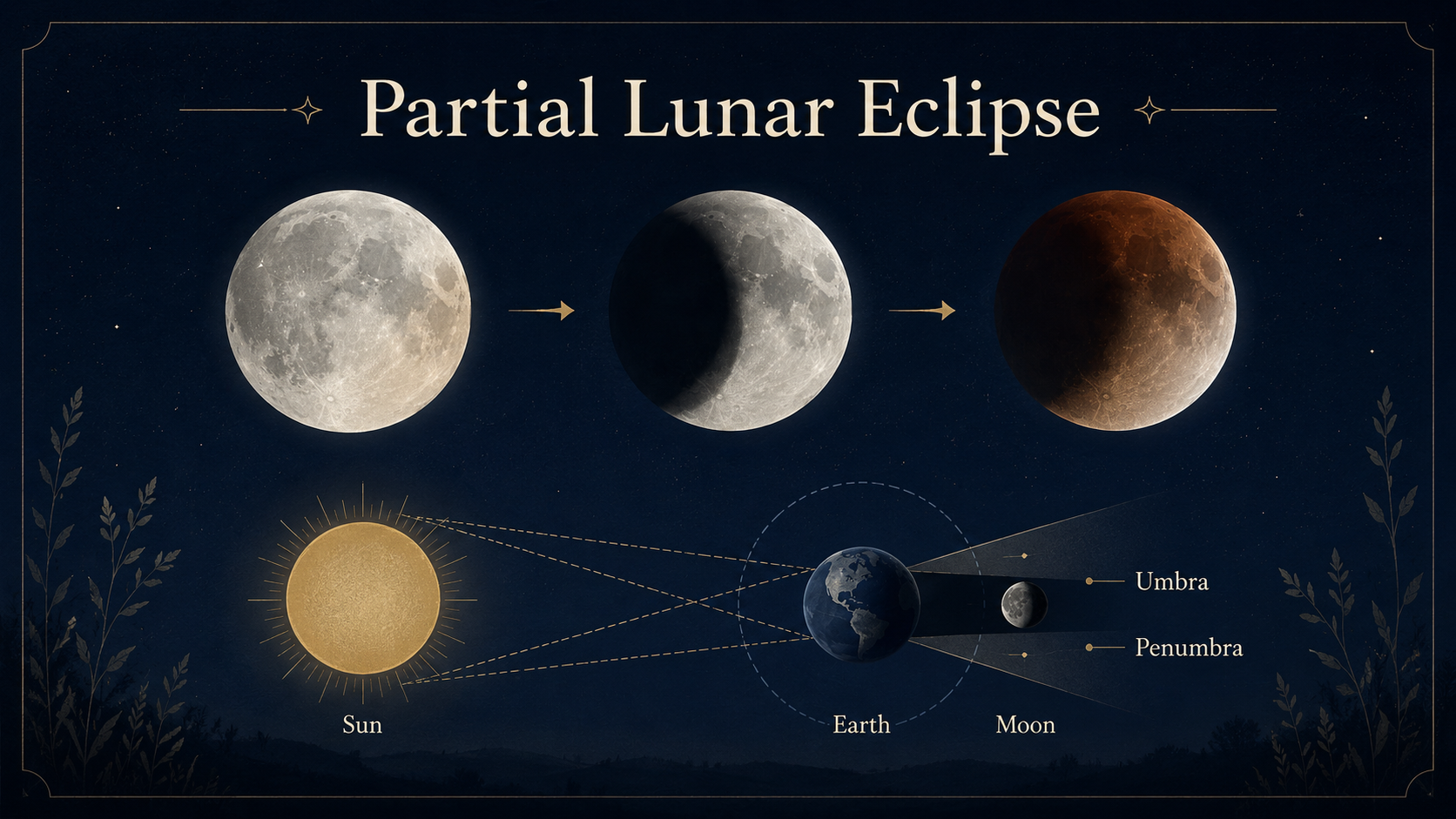
A lunar eclipse happens around a full moon, when Earth moves between the Sun and Moon.
Earth casts two main shadows into space. The lighter outer shadow is called the penumbra, while the darker inner shadow is called the umbra.
During a partial lunar eclipse, only part of the Moon enters the umbra. That creates the obvious dark “bite” you can sometimes see moving across the Moon.
- Penumbral lunar eclipse: The Moon passes through Earth’s lighter outer shadow and may only look slightly dimmer.
- Partial lunar eclipse: Part of the Moon enters Earth’s darker shadow.
- Total lunar eclipse: The entire Moon enters Earth’s darker shadow.
Unlike a solar eclipse, a lunar eclipse is safe to watch with your naked eyes. You don’t need eclipse glasses.
Is a Partial Lunar Eclipse a Blood Moon?
Not technically.
A Blood Moon is the common name for a total lunar eclipse, when the entire Moon moves into Earth’s umbral shadow. Sunlight passing through Earth’s atmosphere can make the Moon appear rusty red, copper, or orange.
A deep partial eclipse can also make the shadowed portion of the Moon look reddish, which is probably why you’ll sometimes see the term Blood Moon used loosely. Astronomically, though, a partial lunar eclipse and a total lunar eclipse are different events.
What Does a Partial Lunar Eclipse Mean Spiritually?
There isn’t one historical or spiritual meaning shared across every tradition. Different cultures have interpreted eclipses in very different ways, and modern witchcraft has developed its own associations too.
Today, lunar eclipses are commonly associated with:
- change and transition
- endings and release
- breaking old patterns
- shadow work and reflection
- hidden information becoming visible
- uncertainty or changing perspective
A partial eclipse also gives us a useful symbol that a total eclipse doesn’t: something can change without disappearing completely.
Not every transition requires wiping the slate clean. Sometimes a routine needs adjusting. A relationship may need new boundaries rather than an ending. A plan may be partly working and partly a mess.
That makes a partial lunar eclipse a natural time to think about gradual change, unfinished business, mixed feelings, or something you’re still in the process of letting go.
A total lunar eclipse may lend itself more easily to symbolism around complete endings or major turning points. A partial eclipse works especially well for changes that are still in progress.
Things to Do During a Partial Lunar Eclipse
You don’t need an elaborate eclipse ritual. If you remember the eclipse ten minutes before bedtime and run outside in pajamas, that works too.
Watch the Eclipse
This sounds obvious, but actually watching the event may be the most meaningful thing you do. Lunar eclipses happen slowly, so you can check the Moon several times and watch Earth’s shadow move across it.
Bring out a chair or blanket, take a few pictures, or write down what you notice. The astronomical event is interesting enough without turning every five minutes of it into a ritual.
Journal About What Is Still Changing
A partial eclipse makes a good symbol for things that are somewhere in the middle. Try one or two of these prompts:
- What am I currently outgrowing?
- What have I started changing but haven’t finished?
- What needs adjusting rather than completely replacing?
- What am I having mixed feelings about?
- What am I having trouble seeing clearly?
You don’t need to work through the whole list. Usually one question is enough.
Try a Simple Release Ritual
Write down one habit, obligation, expectation, or situation you’re ready to loosen your grip on. Then tear up the paper, throw it away, compost it if appropriate, or safely burn it in a fire-safe place.
The physical action isn’t what fixes the situation. It simply gives you a clear moment to acknowledge the change you’re choosing to make.
Use Tarot, Runes, or Another Divination Practice
If divination is already part of your practice, keep the question simple:
What am I not seeing clearly right now?
Or:
What needs my attention before I move forward?
Pull a card, rune, or whatever you normally use and spend some time with the answer.
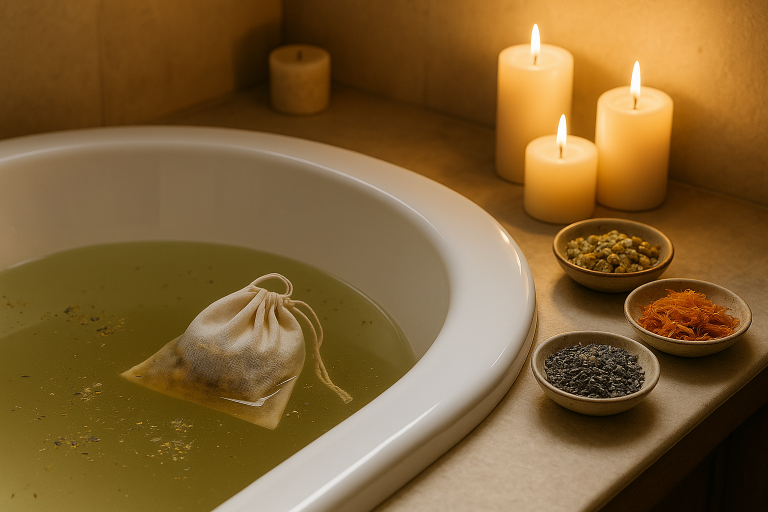
Can You Make Moon Water During a Partial Lunar Eclipse?
Yes, but whether you want to depends on your practice.
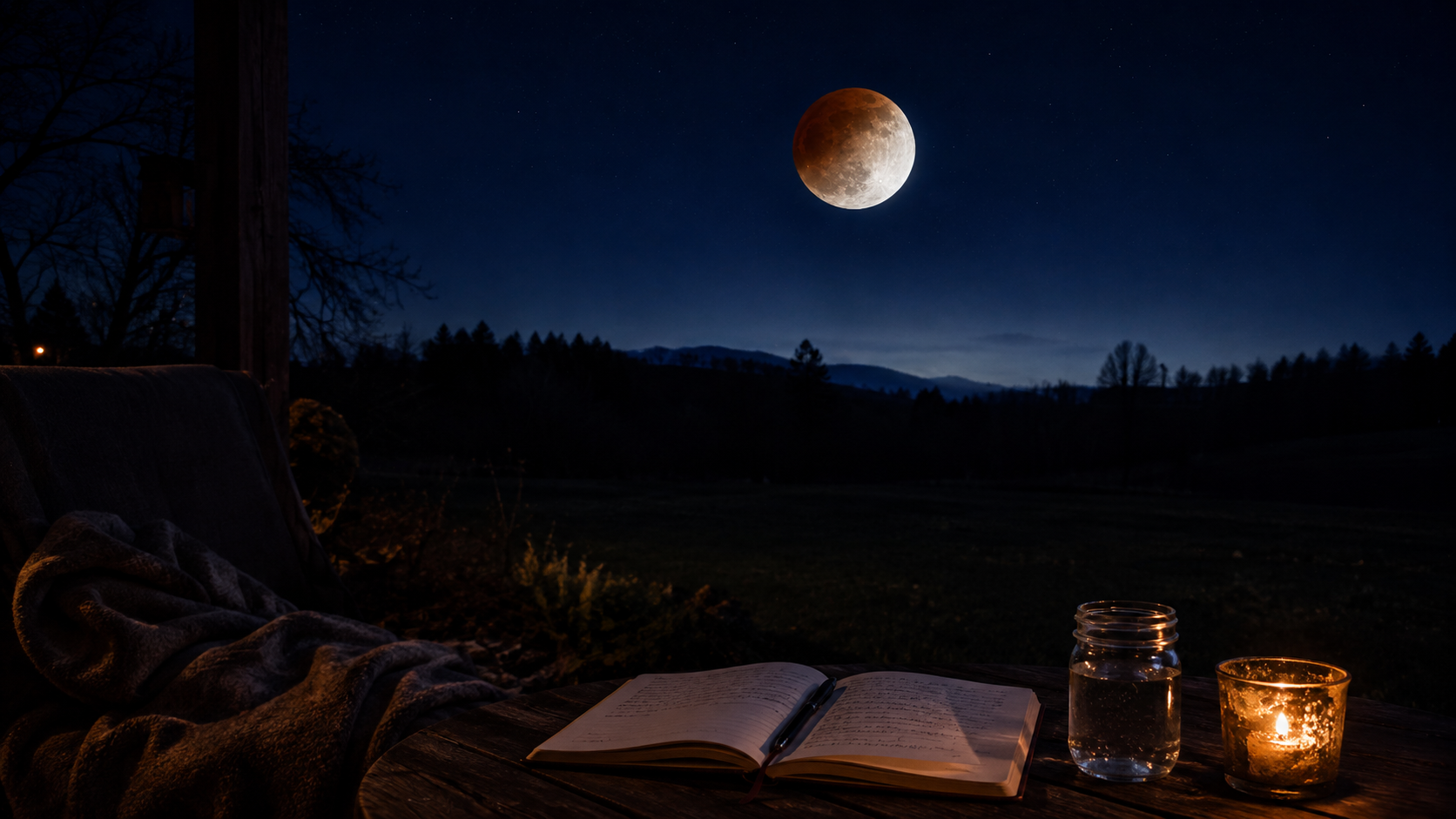
Some practitioners deliberately collect moon water during lunar eclipses because they associate eclipses with transformation, release, shadow work, or major changes. Others avoid eclipse water because they believe eclipse periods feel chaotic or disruptive.
Neither idea is a measurable property of the water. These are spiritual interpretations, so there isn’t one rule everyone has to follow.
If eclipse symbolism fits what you’re working on, you might choose to make a small jar specifically for that purpose. If it doesn’t, skip it and make moon water during another full moon.
If you do make partial eclipse water, label the jar with the date and type of eclipse so you remember what it was made during.
You can also read When to Make Moon Water for more about choosing lunar phases, or start with How to Make Moon Water if you’ve never made it before.
Does the Eclipse Have to Be Visible Where You Live?
Astronomically, eclipse visibility depends on where you are on Earth. An eclipse can be happening while the Moon is below your horizon, which means you won’t actually be able to see it.
Spiritually, practices differ. Some people only work with lunar events they can physically observe, while others use the astronomical timing whether the event is visible from their location or not.
There isn’t one universal answer here either. Decide whether physically seeing the event matters to your practice and work from there.
Quick FAQ
Is the August 2026 partial lunar eclipse a Blood Moon?
Technically, no. A Blood Moon usually refers to a total lunar eclipse. The August 27–28, 2026 eclipse is partial, but it is so deep that most of the Moon enters Earth’s umbra. That can make much of the eclipsed portion look coppery or red, which is why it may look a lot like a Blood Moon even though it is not one astronomically.
More About Lunar Eclipses
A partial lunar eclipse may not have the dramatic reputation of a Blood Moon, but its halfway-in-shadow appearance gives us something useful to work with. Most changes in real life aren’t clean, complete, or instantaneous either.
If you want to explore total lunar eclipses, read Blood Moon Meaning, Rituals & Eclipse Guide. For eclipse-specific moon water ideas, see Blood Moon Water: How to Collect It & 7 Powerful Ritual Uses.
You may also like Full Moon Names, Meanings, and Special Moons and Rare Moons Explained.